
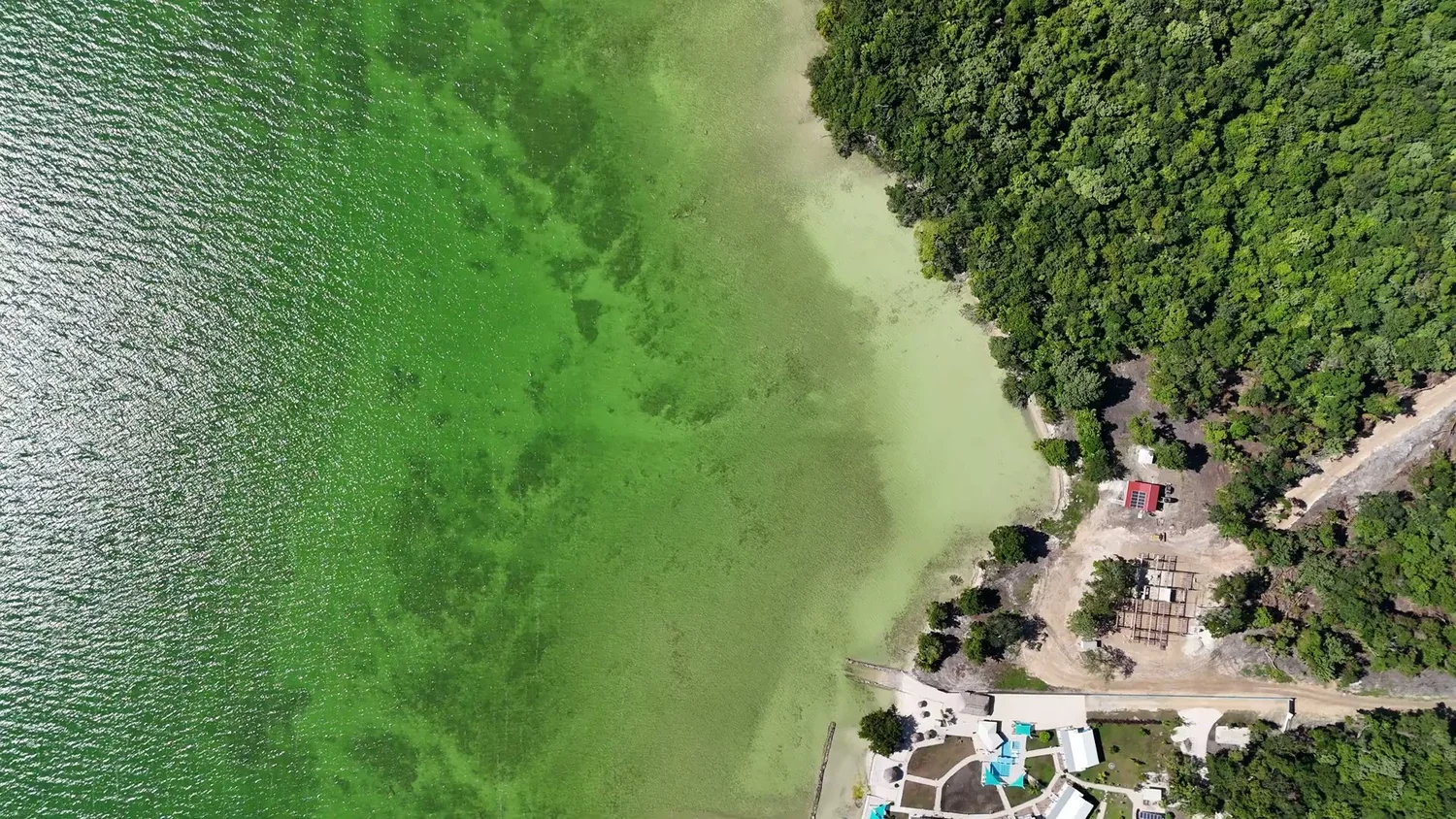
Sargassum is a serious problem on Belize's outer coast and cayes, but Corozal Bay is a different kind of water. It is a shallow, brackish bay sheltered behind Ambergris Caye, with limited flow from the open sea. We found no public reports of large sargassum landings on Corozal Bay, though that is not a guarantee it never happens.
This post explains what sargassum is, where it hits in Belize, why the Corozal shoreline behaves differently, and how to check conditions yourself before a trip or a purchase.
What is sargassum and why has it become a problem?
Sargassum is a brown seaweed that floats in large mats on the open ocean. Since 2011, a huge band of it, known as the Great Atlantic Sargassum Belt, has formed across the tropical Atlantic most summers. According to the summary of research on the belt, it is the largest seaweed bloom recorded, and in June 2022 it was estimated at 24.2 million tons. The only year without a major bloom since it began was 2013.
At sea, sargassum is a habitat for fish and turtles. The trouble starts when it washes ashore. Beached sargassum usually starts to rot within about 48 hours, releasing hydrogen sulfide and ammonia. The rotten egg smell irritates eyes, throats and lungs, and it is a particular concern for people with asthma. Strandings on the Mexican Caribbean coast reached an estimated 3.4 million tons in 2025, with large cleanup costs and lost tourism.
Where does sargassum hit in Belize?
Sargassum drifts in on ocean currents, so the places that face the open Caribbean or sit near reef gaps tend to see the most. In April 2026, Greater Belize reported a National Meteorological Service forecast that gave San Pedro and Caye Caulker a high probability of moderate impact, and Hopkins and Placencia a high probability of major impact.
That is a useful snapshot of the pattern: the cayes and the southern mainland coast are exposed. Ambergris Caye is in northern Belize, so "the north" is not automatically safe. The question is whether seaweed makes it into the enclosed bays behind the cayes.
Why Corozal Bay is different
Corozal Bay is an arm of Chetumal Bay, which sits behind Ambergris Caye. The Corozal Bay Wildlife Sanctuary management plan describes several features that set it apart from the outer coast:
| Feature | Outer coast and cayes | Corozal Bay |
|---|---|---|
| Exposure | Faces the open Caribbean and reef gaps | Enclosed lagoon behind Ambergris Caye |
| Water exchange | Constant ocean flow | Shallow shoals to the south limit flow in and out |
| Salinity | Full sea water | Brackish, about 13 ppt in the dry season and 7 ppt in the wet season |
| Depth | Varies widely | About 3 m on average, rarely more than 2 m outside deeper holes |
| Main inputs | Ocean currents | Fresh water from the New River and Rio Hondo |
Floating sargassum would have to travel a long way through shallow, low-salt water to reach Corozal's shoreline. That is one reason the issue rarely comes up among Corozal residents, while it is a regular topic on the cayes. The sanctuary plan, which reviews threats to the bay in detail, does not mention sargassum at all.
We are careful not to overstate this. Ocean conditions change, and blooms have been growing. If anyone tells you sargassum can never reach a shoreline, treat that with caution.
Is that seaweed on the shore sargassum?
Corozal Bay has its own plant life. The management plan describes seagrass beds of turtle grass and shoal grass in the bay. After storms or strong winds, loose seagrass and algae can wash up along the shore. This is a normal part of a healthy estuary and is not the same as sargassum.
- Sargassum is golden to brown, with small round air bladders that look like berries, and arrives in thick floating mats.
- Seagrass wrack is made of long, flat green or brown blades, usually in thinner lines along the waterline.
Both can smell as they break down, but seagrass wrack usually comes in much smaller amounts.
What the sargassum season looks like
Blooms tend to be largest in the summer months. The University of South Florida's Sargassum Watch System tracks the belt by satellite and has issued monthly outlook bulletins for the Caribbean since 2018. Its September 2026 bulletin said amounts had declined in almost every region but were still relatively high for that time of year. The bulletins are regional and are not meant to predict conditions at a specific beach.
Belize's National Meteorological Service also lists a sargassum forecast among its products, and the Belize Tourism Board shares sargassum information for visitors. Check both before a beach trip to the cayes or to the Mexican Caribbean.
Planning beach days from Corozal
Living in Corozal puts several very different waters within reach, and sargassum affects each of them differently.
- Ambergris Caye. San Pedro is a short flight from Corozal. It faces the reef and open sea, so it is exposed in heavy years. Check the national forecast and ask your hotel about recent beach conditions before you go. Our guide to getting from Corozal to San Pedro covers the trip.
- Bacalar, Mexico. The Bacalar lagoon is a freshwater lake, not the sea, so ocean sargassum is not part of the picture there. It is about an hour's drive north of Corozal, depending on the border.
- The Mexican Caribbean coast. Beaches further north in Quintana Roo face the open Caribbean and have seen the largest strandings in the region. Plan those trips around current outlooks.
- Corozal Bay itself. Calm and sheltered, better for kayaking, fishing and sunsets than for reef swimming.
For anyone who wants regular beach time, the mix matters. A home base on the quieter bay, with clear water a day trip away, suits many residents who prefer to choose their beach days around the forecast.
What this means for buyers comparing locations
If you are weighing the Corozal coast against Ambergris Caye or the southern coast, sargassum is one factor among many. The cayes and Placencia offer clear water and reef access that Corozal Bay does not. In return, they face more seaweed exposure in bad years.
Corozal's trade-off runs the other way: calmer, cloudier bay water, more affordable land, and much less exposure to seaweed landings. Our comparisons of Corozal and Ambergris Caye and Corozal and Placencia cover the other differences, from costs to services.
At Coastal Vista Phase 2, the lots are on Consejo Road northeast of Corozal Town, near the bay rather than on an ocean beach. If water quality near any property matters to you, visit in late spring or summer and look at the shoreline yourself.
Tips for visitors and new residents
- Check forecasts before beach days on the cayes or in Quintana Roo, especially from spring through late summer.
- Keep your distance from rotting piles. People with asthma or heart conditions should be especially careful around decaying seaweed.
- Do not judge the bay by its color. Brown or green water in Corozal Bay is usually sediment and river input, not seaweed.
- Ask locals. Residents who have lived on the bay for years are the best guide to what washes up and when.
For more on what the water is like for swimming and paddling, see can you swim in Corozal Bay.
Frequently asked questions
Does sargassum reach Corozal?
We found no public reports of significant sargassum landings on Corozal Bay. The bay's sheltered, brackish water makes it far less exposed than the cayes, but conditions can change.
Does sargassum affect Ambergris Caye?
Yes. National forecasts have rated San Pedro as likely to see moderate impact in some periods. Check current forecasts before a trip.
When is sargassum season in Belize?
Blooms are usually heaviest in summer, with large year-to-year variation. Satellite bulletins give a regional outlook each month.
Is sargassum dangerous?
Floating sargassum is harmless, but rotting piles release hydrogen sulfide, which can irritate eyes and lungs. Avoid lingering near large decaying mats.
See the bay for yourself
Current lots, sizes and pricing are listed on the Coastal Vista lot map. If you would like a shoreline stop added to your site visit, let us know when you plan to come and we will build it into the day.