
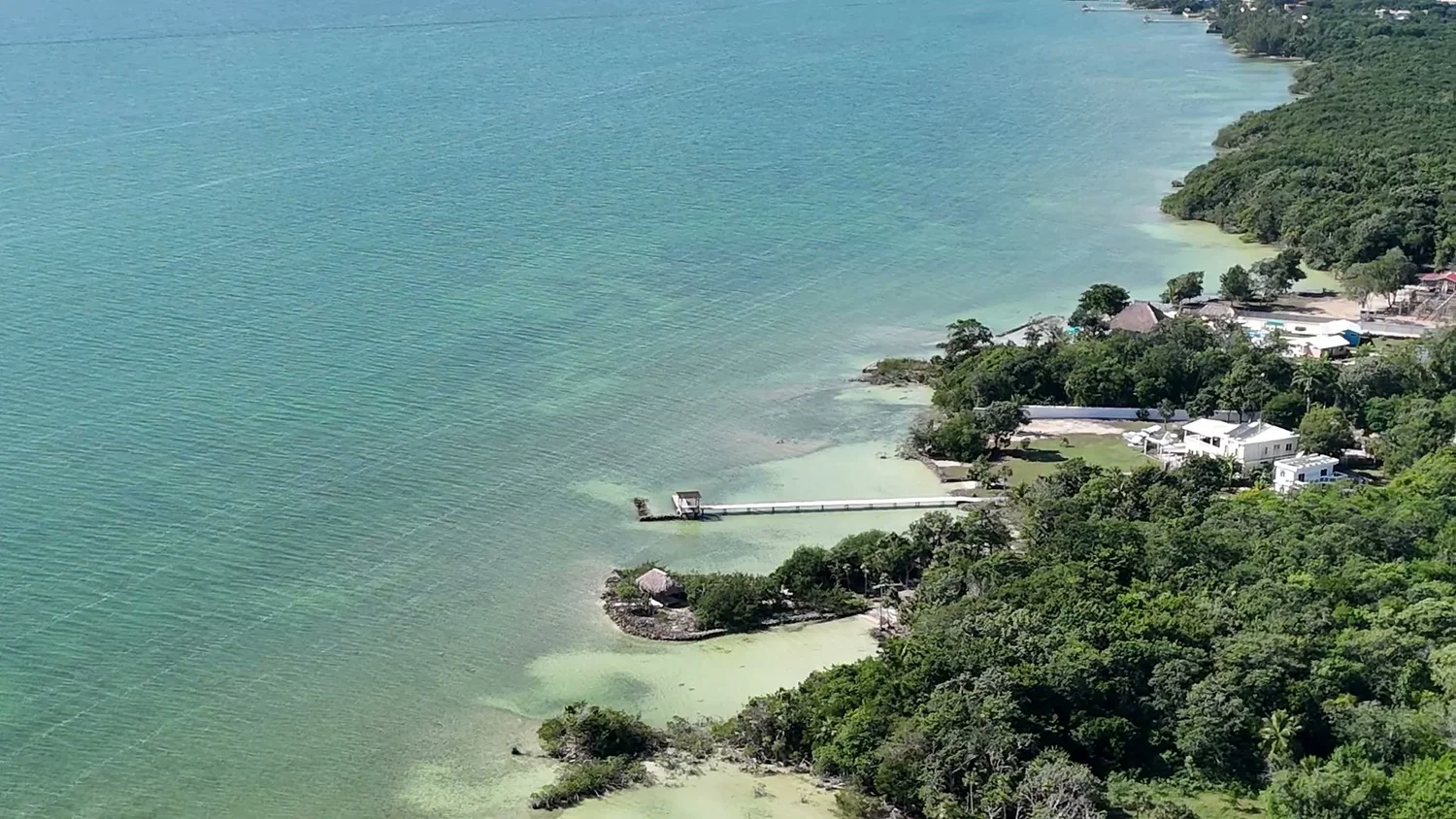
Yes, you can swim in Corozal Bay, and people do, but it is not a classic Caribbean beach. The bay is a shallow, brackish estuary with a soft mud and seagrass bottom and usually cloudy water. Expect calm, warm water good for wading, paddling and cooling off, rather than white sand and snorkel-clear views.
Knowing what the bay actually is helps you set expectations before you visit, and before you pay extra for a waterfront lot. Here is what the science says, what swimming is like in practice, and where people in northern Belize go when they want clear water.
What kind of water is Corozal Bay?
Corozal Bay is an inlet of the larger Chetumal Bay, sitting behind Ambergris Caye on Belize's northern coast. The New River and the Rio Hondo pour fresh water into the system, and shallow shoals to the south limit how much sea water flows in and out. The result is an estuary, part fresh and part salt.
The Corozal Bay Wildlife Sanctuary management plan gives the key numbers:
| Feature | What the management plan reports |
|---|---|
| Average depth | About 3 m, ranging from 1 to 7 m; rarely more than 2 m outside karst depressions |
| Salinity | Mean of about 13 ppt in the dry season and about 7 ppt in the wet season (open sea water is roughly 35 ppt) |
| Bottom | Mostly fine mud with algae, with local seagrass beds; bedrock can sit just inches under the mud near shore |
| Clarity | Generally turbid; the best visibility measured north of Corozal Town was 160 cm in the dry season and 287 cm in the wet season |
| Protection | Declared a wildlife sanctuary in 1998, covering roughly 178,000 acres |
So the water is warm, calm and low in salt. You will float a little less than in the open sea, and you will rarely see the bottom once you are past knee depth.
What is swimming in the bay actually like?
Most of the time the surface is flat or lightly rippled, since the reef and cayes block ocean swell. That makes the bay comfortable for a slow swim, wading with kids, kayaking and paddleboarding. Some waterfront homes and resorts have docks, and swimming off the end of a dock is often easier than walking in from shore.
Walking in from the shore is where expectations matter. The bottom near land can be soft mud, seagrass or hard limestone, and long stretches are shallow. Water shoes help. Residents on expat forums also note that Corozal has little true sand beach, which is one reason sand fleas are not much of a complaint here.
The color changes with light, wind and rain. On bright calm days the bay can look green or turquoise from above. After storms, river runoff and stirred-up sediment make it browner for a while.
Is the water clean enough to swim?
There is no public, regularly updated water quality report for swimming spots on the Belize side that we could find, so it is worth being careful. The sanctuary management plan lists real pressures on the bay: Chetumal across the border has historically discharged untreated sewage into the bay, and poor septic systems in Corozal and Consejo are flagged as a local pollution source. Storm runoff also carries sediment and farm waste down the rivers.
Sensible habits most residents follow:
- Avoid swimming near river mouths, drains and outfalls.
- Wait a day or two after very heavy rain before swimming near town.
- Do not swim with open cuts, and rinse off afterward.
- Ask neighbors where they swim; locals know which stretches stay cleaner.
Wildlife: manatees, crocodiles and fish
The bay is a priority area for the West Indian manatee. The management plan cites earlier estimates of several hundred manatees using the wider bay system, and sanctuary rules prohibit swimming with them. If you see one, give it space and keep boats slow.
The plan also lists the area as habitat for crocodiles, dolphins and sea turtles. Crocodiles tend to stay near mangroves, lagoons and river mouths. Swim in open, well-used water in daylight, stay away from mangrove edges, and ask locals about recent sightings. The bay is also a well-known destination for fly fishing for tarpon and bonefish, so you will share the water with anglers.
The Forest Department is the legal manager of the sanctuary, with the Sarteneja Alliance for Conservation and Development as co-manager. They are good contacts for current rules on fishing and boating.
Boating, paddling and fishing on the bay
For many residents, the bay is less about swimming and more about being on the water. Calm conditions make it a good place for kayaks and paddleboards much of the year, and the sanctuary plan describes sport fishing, especially fly fishing, as a major activity. Snorkeling, diving and kayaking tours also operate in the wider bay system, though tourism is still small compared with the cayes.
A few points to keep in mind:
- Watch the wind. The bay is shallow, so a strong breeze can build a short, choppy sea quickly.
- Know the depth. With much of the bay under 2 m and hard limestone close to the surface in places, propellers and fins can hit bottom. Go slowly in unfamiliar water.
- Respect the sanctuary. Keep speeds down where manatees may be feeding, and check current fishing rules before you cast.
- Carry water and sun protection. There is little shade on the bay, and the sun is strong year-round.
If you buy near the bay and plan to keep a boat, ask about launch points, dock permits and storage before you buy. Those details vary by property and are much easier to sort out up front.
Where to go for clear water nearby
When residents want clear, blue water, they usually travel a short way:
- Bacalar, Mexico. The freshwater Bacalar lagoon is roughly an hour's drive north, depending on the border. See our Bacalar day trip guide.
- Ambergris Caye. Reef swimming and snorkeling are a short flight away. Our post on getting from Corozal to San Pedro covers the options.
- Cerros. The Belize Tourism Board notes that the Maya site of Cerros can be reached by a short boat ride across Corozal Bay, which makes a good half-day outing on the water.
For more ideas, see things to do in Corozal.
What this means if you are buying near the bay
Bay views and breezes are a large part of the appeal of the Corozal coast. The breeze off the water also helps keep insects down and homes cooler. But if your picture of waterfront living is swimming off a white sand beach, Corozal Bay will not match it, and it is better to know that before paying a waterfront premium.
Many buyers find a lot near the bay, rather than on it, gives most of the lifestyle for less money. Coastal Vista Phase 2 sits on Consejo Road northeast of Corozal Town, with Corozal Bay to the southeast. If you want water access, ask any seller about public access points, docks, and whether waterfront building is limited by setbacks or mangrove rules. A licensed Belizean attorney can confirm what applies to a specific shoreline lot.
Frequently asked questions
Is Corozal Bay salt water?
It is brackish. Salinity measured in the bay is well below open sea water and drops further in the rainy season as rivers flow in.
Are there sharks in Corozal Bay?
The sanctuary documents we reviewed focus on manatees, crocodiles, dolphins, turtles and sport fish. Ask local fishing guides about current sightings.
Is there a sandy beach in Corozal?
Not in the classic sense. Residents describe very little true sand, and much of the shore is mangrove-fringed or built up, so docks are a common way into the water.
Can you snorkel in Corozal Bay?
Tours do run in the wider bay, but visibility is usually limited. For reef snorkeling, head to Ambergris Caye.
Plan a visit to the coast
You can browse current lots, sizes and prices on the interactive lot map. If you would like to see how close Phase 2 is to the bay before you decide, get in touch and we can arrange a tour that includes the waterfront.