
The most common mistakes buying land in Belize are skipping an independent attorney, not checking the title and survey yourself, assuming access and utilities, underestimating closing costs, and sending money before the paperwork is right. Almost all of them are avoidable with a bit of patience, a site visit and a lawyer who works for you.
Below are 15 mistakes we see buyers make or worry about, grouped by stage. Each one comes with what to do instead. For a step-by-step list you can work through, use our Belize land due diligence checklist alongside this post.
Legal and title mistakes
1. Using the seller's lawyer, or no lawyer
Your attorney's job is to protect you, which is hard to do if they also act for the seller. Hire your own licensed Belizean attorney to review the title, the agreement and the transfer. Our guide to choosing a real estate attorney in Belize lists what to ask.
2. Not understanding the title type
Belize has two systems. According to the Ministry of Natural Resources' Land Registry and Land Title Unit page, land in compulsory registration areas falls under the Registered Land Act, where the Registry records ownership and guarantees title to registered interests, while land outside those areas is handled under the General Registry Act at the Land Title Unit. Titles can also be absolute or provisional. Ask your attorney which applies and what it means for your purchase.
3. Paying before the search and agreement are done
A deposit sent on a handshake is the root of many bad stories. Wait until your attorney has completed the title search, confirmed the seller's right to sell and checked for charges or caveats, and you have a signed written agreement. Then pay through your attorney or another accountable channel, never to an individual's personal account because they asked nicely.
Land and site mistakes
4. Not finding the survey pins
The parcel on paper and the land on the ground should match. Ask for the registered survey plan, then walk the boundary markers yourself or with a surveyor. Confirm the lot size and shape, and that nothing, such as a neighbour's fence or a building, sits over the line.
5. Assuming there is legal access
A track across someone else's land is not the same as a legal road. Confirm that your lot fronts a public road or has registered access, and visit after heavy rain to see whether the road stays passable.
6. Assuming utilities are at the lot line
Electricity, water and internet may be nearby without reaching your lot. Ask what is available at the specific parcel, what it would cost to extend service, and whether you would need a well, rainwater tank or solar instead. Get it in writing rather than relying on a listing description.
7. Not checking drainage and flooding
Low-lying land can hold water for days in the wet season. Look at the lot in the rainy months if you can, ask neighbours, and look for signs such as water lines on trees, standing water or reeds. Budget for fill or raised foundations where needed.
8. Ignoring environmental limits
Mangroves are protected. Under the Forests (Protection of Mangroves) Regulations, 2018, altering mangroves requires a permit from the Forest Department, and the department's licensing page sets out per-acre fees. If a waterfront lot includes mangroves, factor in what you are allowed to clear before you agree a price.
Money mistakes
9. Forgetting the transfer tax
Closing costs can be significant. The Valuation Unit of the Lands Department states that, since November 1, 2017, transfer tax (stamp duty) is 8% for foreigners on land valued above BZ$20,000, and 5% for Belizean or CARICOM nationals. Add attorney fees and registration costs. See our breakdown of Belize land closing costs and property tax, and confirm current figures with your attorney.
10. Mixing up Belize and US dollars
The Belize dollar is pegged at BZ$2 to US$1, and listings use both. A price of "$40,000" could mean US$40,000 or US$20,000. Ask which currency every figure is in, and make sure your agreement states it.
11. Not reading financing terms closely
Seller financing can make land affordable, but terms differ. Check the total price on financing compared with cash, the term, what happens if you miss a payment and when title transfers. At Coastal Vista, for example, the financing price is the cash price plus US$2,500, and larger acreage is cash only.
12. Forgetting the annual land tax
Owners pay land tax each year. Keep receipts, and if you live abroad, arrange for someone to pay on time so arrears do not build up.
Building and use mistakes
13. Skipping the covenants, or buying where there are none
Covenants (CCRs) set rules on what can be built and how lots are used. Read them before you buy so you know what you and your neighbours can do. Where there are no covenants, consider what might go up next door.
14. Assuming you can build anything, any time
Building work in Belize needs a permit. The Central Building Authority's construction process requires plans, a land document and a PUC-approved electrical design, and larger homes need stamped plans from a registered architect or engineer. Budget for design, permits and inspections as well as construction.
15. Not planning your immigration status
Owning land does not give you the right to live in Belize. Visitors stay on permits that are extended in 30-day blocks; the Immigration Department lists the visitor's permit extension at BZ$200. Plan a residency route, such as permanent residency or the Qualified Retired Persons program, if you intend to stay long term. If you plan to rent the property, register with the Belize Tourism Board before advertising.
How to avoid these mistakes: a short plan
- Visit, ideally more than once and in different seasons.
- Hire your own Belizean attorney before you pay anything.
- Get the title search, survey plan and a written agreement.
- Walk the boundaries and check access, drainage and utilities.
- Read the covenants and confirm what you can build.
- Budget for transfer tax, fees, land tax and building costs.
- Pay through accountable channels and keep every receipt.
It also helps to be clear about who checks what:
| Check | Who usually does it |
|---|---|
| Title search, charges and the seller's right to sell | Your Belizean attorney |
| Boundaries, pins and lot size | You, with a licensed surveyor if anything looks off |
| Access, drainage and neighbours | You, on site visits in different seasons |
| Utilities at the parcel | You, by asking the providers directly |
| Covenants and building rules | You and your attorney, plus your architect for design limits |
| Transfer tax and fees | Your attorney, who prepares the closing figures |
None of this replaces legal advice. Confirm the steps for your purchase with a licensed Belizean attorney. If something feels rushed or a seller resists checks, slow down; our post on land scam red flags covers warning signs.
Frequently asked questions
Can foreigners own land in Belize?
Yes. Foreigners can generally own land in Belize, with the transfer tax rate for non-Belizeans set higher than for Belizean and CARICOM nationals.
Do I need to visit before I buy?
It is strongly recommended. If you cannot, send someone you trust, or a licensed surveyor, and ask for video of the boundaries and access road.
What is the biggest single mistake?
Paying money before your own attorney has confirmed the title. Most other problems can be fixed; that one is often hard to undo.
How long does a purchase take?
It varies with the title type, searches and registration. Ask your attorney for a realistic timeline at the start.
Buy with the information in front of you
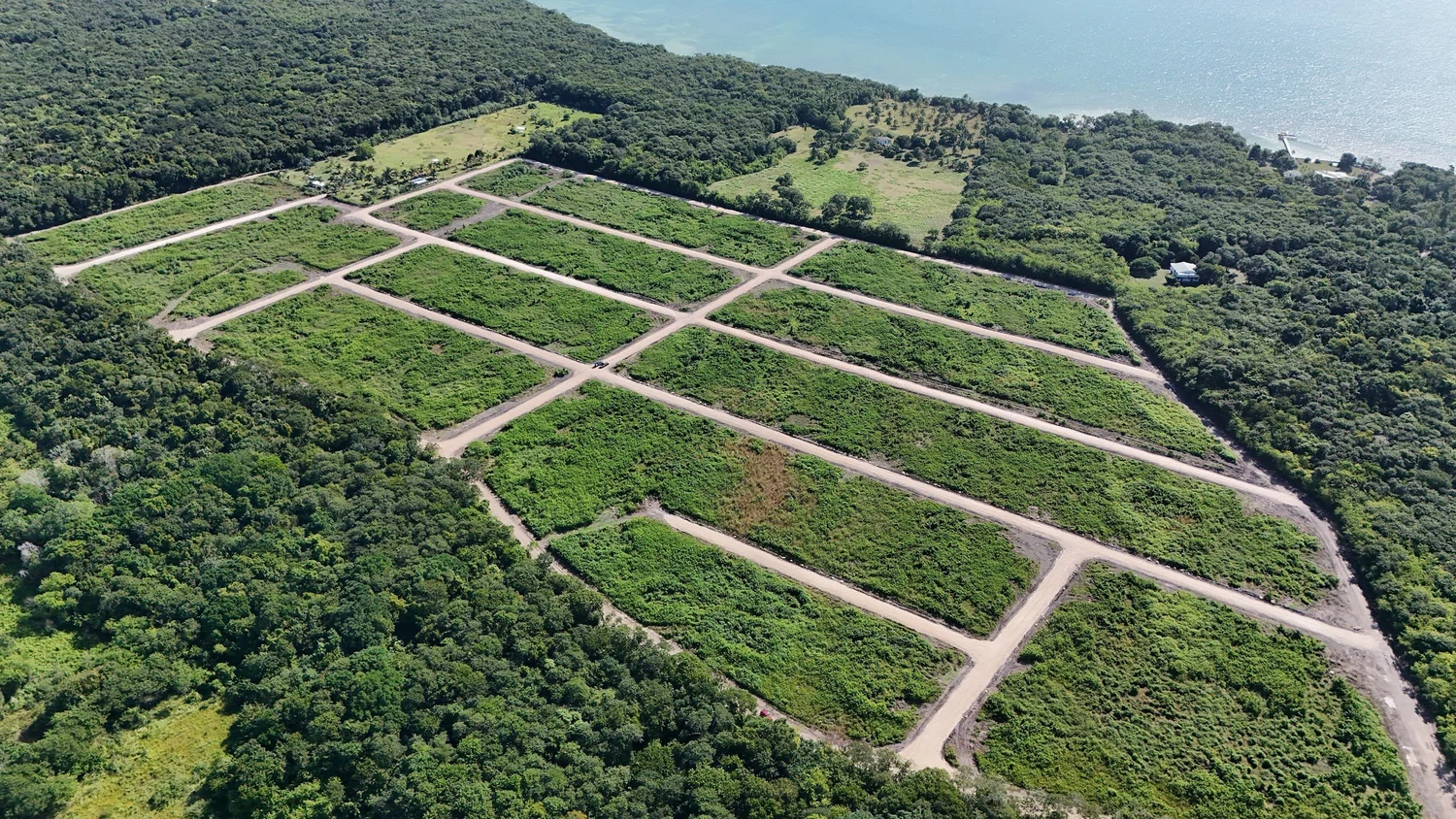
Coastal Vista Phase 2 is a surveyed subdivision on Consejo Road northeast of Corozal Town, with roads cut, lot lines laid out and community covenants in place. Prices and live availability are on the lot map, and you are welcome to ask us anything about title, survey or financing before you decide.