
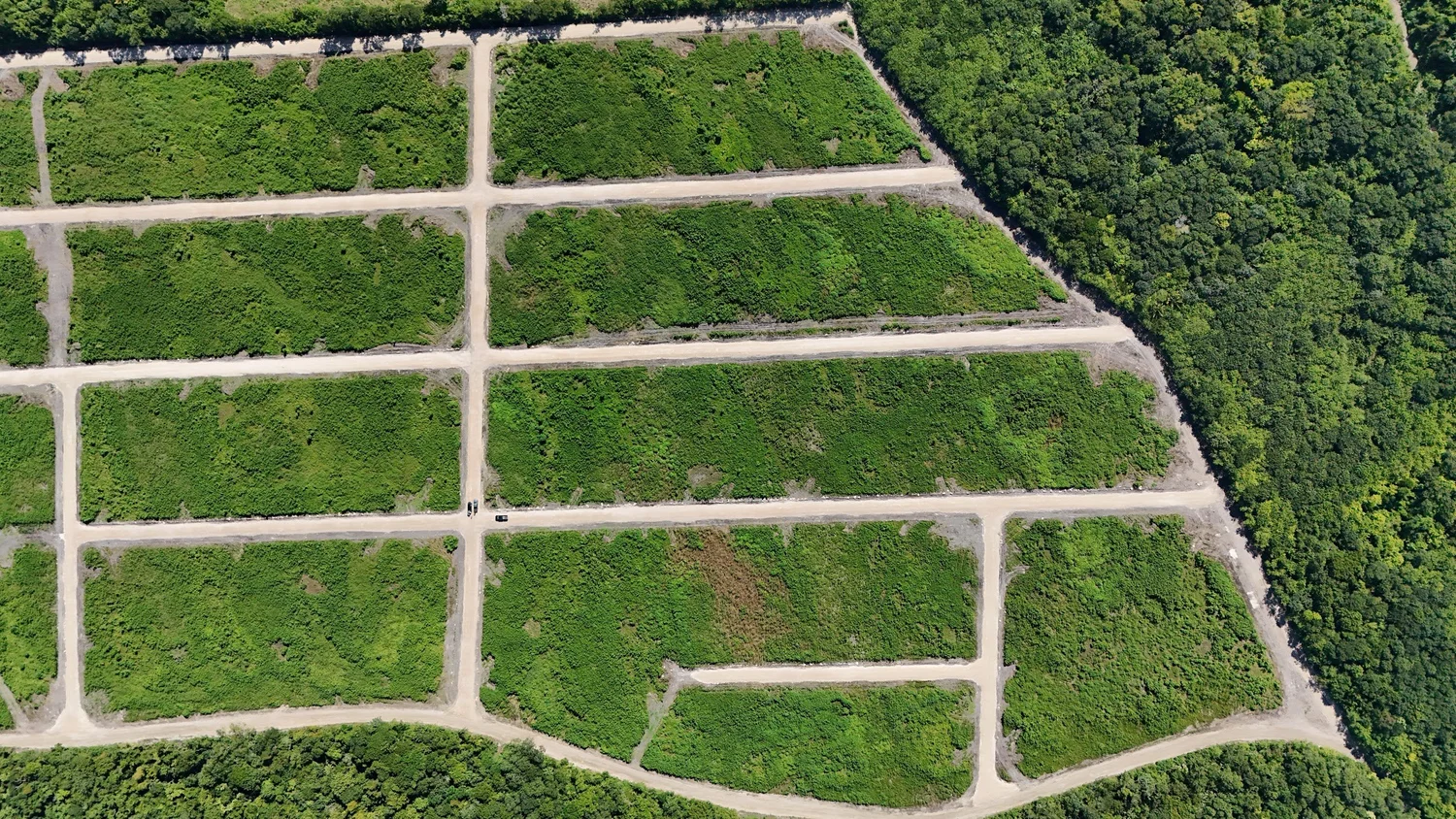
In Belize, subdivision lot titles are issued in two stages. First the owner of the larger "parent" parcel has it surveyed and formally subdivided, so the Land Registry closes the parent register and opens a new register, with a new parcel number, for each lot. Then each lot is transferred to its buyer, who becomes the registered owner of that numbered parcel.
Knowing that sequence tells you what to ask a developer, what your attorney should check, and where your purchase sits in the process. This post focuses on land under the Registered Land Act, which covers most surveyed subdivisions in declared registration areas.
Why a lot cannot be sold off a big parcel without subdividing
The Registered Land Act (Cap. 194) is explicit. Section 89 says no part of the land comprised in a register shall be transferred unless the proprietor has first subdivided the land. In plain terms, a developer who owns one 40-acre parcel cannot register a transfer of "Lot 17" to you until Lot 17 exists as its own parcel with its own register.
That rule protects buyers. It means that when your transfer is registered, you own a defined parcel shown on the Registry Map, not an undivided share of someone else's land.
How does the subdivision process work?
Here is the general sequence under the Act. Exact requirements and timelines vary by location and by what the Lands Department asks for, so treat this as a map rather than a checklist.
- Survey and layout. A licensed land surveyor prepares a subdivision plan showing each new lot, roads and any open spaces. Our post on Belize land surveys explains what a survey plan contains.
- Planning sign-off. Section 24 lets the Registrar, for subdivisions intended for building development, require a plan certified by the appropriate authority as conforming with planning law. The Ministry of Natural Resources lists Physical Planning applications on its forms and applications page.
- Application to subdivide. The owner applies to the Registrar using the form to combine or subdivide parcels (Form 26 on the Ministry list). Boundary changes are recorded through a mutation form (Form 25).
- New registers open. Under section 24, the Registrar effects the division by closing the register for the parent parcel and opening new registers for the new parcels. Section 19 confirms that a parcel whose boundaries change gets a new number.
- Transfer to the buyer. The owner signs a transfer of land in the prescribed form for your specific parcel. Under section 86, the transfer is completed when you are registered as proprietor and the instrument is filed.
- Land certificate. Under section 34, the Registrar issues a land certificate to a proprietor who asks for one. Note that the certificate is only prima facie evidence; the register itself is the authoritative record.
What stage is your lot at?
Buyers often reserve or start paying for a lot while the developer is partway through this process. That is common, but you should know exactly where things stand. Ask the developer, and have your attorney confirm:
| Stage | What exists on the register | What your attorney should see |
|---|---|---|
| Before subdivision | One parent parcel in the developer's or owner's name | Search of the parent parcel; survey plan; written timeline for subdivision |
| Subdivision lodged | Application filed, new registers not yet open | Proof of filing; planning approval if required |
| Subdivision registered | Separate register and parcel number for your lot | Official search of your lot showing the seller as proprietor |
| Transfer registered | You as proprietor of your parcel | Search showing your name; land certificate if requested |
Questions to put to any developer
Short written answers to these questions will tell you a lot about how organized a subdivision is:
- What is the parent parcel number, and whose name is on its register today?
- Has the subdivision been registered, and if so, what is my lot's new parcel number?
- If not, what has been filed, when, and what is still outstanding?
- Are there any charges (mortgages) on the parent parcel, and how will my lot be released from them?
- Who prepared the survey, and can my attorney have a copy of the plan?
- When exactly will you sign the transfer of my lot?
A charge on the parent parcel is worth special attention. Under section 67 of the Act a charge is security for a debt, registered as an encumbrance. If the parent parcel is charged, your attorney will want to see how the lender will discharge or release your lot before or at transfer.
Our guide to searching the Belize Land Registry explains how to read those search results.
Protecting yourself while the title is being issued
If you are paying over time or the lot register is not yet open, the contract does most of the work. A well-drafted sale or reservation agreement should state:
- The parent parcel number and the lot number on the approved or proposed plan.
- The lot's approximate area and dimensions as surveyed.
- Who pays for survey, subdivision, transfer and stamp duty, and when.
- When the transfer will be signed (for example, on full payment) and what happens if subdivision is delayed.
- Which covenants or HOA rules will bind the lot.
The Registered Land Act also provides for cautions and restrictions on the register, and the Ministry lists a caution form (Form 18). Whether lodging one makes sense for your purchase is a question for your attorney.
If you are a non-resident, a transfer between a resident and a non-resident also requires prior written notice to the Central Bank of Belize. The Central Bank's land transfer requirements list the form and identity documents involved.
Registered land versus deed-system land
Not all land in Belize sits under the Registered Land Act. The Ministry's Land Registry page explains that areas outside compulsory registration fall under the General Registry Act, where title passes by recorded deeds. Subdividing deed-system land follows a different path, and some parcels are brought into the registered system through first registration (Form 19). If a subdivision you are considering is on deed-system land, ask your attorney to explain how lot titles will be created and recorded there. Background on each title type is in our post on Belize land title types.
This post describes how the law generally works and is not legal advice. Confirm the details of any purchase with a licensed Belizean attorney.
How this applies at Coastal Vista Phase 2
Coastal Vista Phase 2 is Parcel 139, about 47.11 acres on Consejo Road northeast of Corozal Town. It has been laid out as 164 surveyed lots ranging from roughly 6,400 to 17,500 square feet, with roads cut, lot lines laid out, and two community green spaces of about 2.56 and 2.24 acres. Because title status can differ from lot to lot and changes as transfers are registered, we do not summarize it in a blog post. Ask us for the current position on any lot you are interested in, and have your attorney verify it at the registry.
Frequently asked questions
How long does it take to get a title for a subdivision lot?
There is no fixed published timeline. It depends on whether subdivision is already registered and on registry processing. Ask the seller and your attorney for a realistic estimate.
Will my lot have its own parcel number?
Once the subdivision is registered, yes. Under the Registered Land Act each new parcel gets its own register and number.
Is a land certificate the same as title?
Not quite. The register is the authoritative record of title. A land certificate is evidence of what the register shows and is issued on request.
Can I build before my transfer is registered?
That depends on your contract and the HOA rules. Most buyers wait until they are the registered owner before investing in construction.
Find a lot and ask about its title
The Phase 2 lot map lists every lot with its size, price and current availability. Pick the ones you like and ask us for their title status so your attorney can check it before you commit.