
Corozal has mosquitoes, especially at dawn and dusk, after rain and near mangroves, swamps and long grass. Sandflies are a much smaller issue than in southern Belize, according to residents. Most people manage bugs with breeze, screens, fans, repellent and cleared yards, but dengue risk means bites are worth taking seriously.
Bugs are one of the first objections people raise about northern Belize, and one of the least discussed in real estate marketing. This guide covers what residents report, when bugs are worst, the health side, and the design choices that make the biggest difference once you build.
How bad are mosquitoes in Corozal?
It depends on where you are standing and what the weather is doing. Corozal sits among wetlands, lagoons and mangroves, and one recent pros-and-cons review of living in Corozal puts it plainly: mosquitoes, sandflies and other insects are part of daily life here, and slightly more noticeable than on the islands or in parts of the south.
Residents in an expat.com thread on bug bites add useful detail:
- A homeowner in Consejo said mosquitoes favor damp areas with swamp or thick grass, and a breeze keeps them down. He spends most days on an unscreened second-floor veranda, and only occasional mosquito "hatches" send his household indoors for a day or two.
- A resident just outside Corozal Town said mosquitoes are bad in heavily wooded areas and bite on the short walk from the carport to the door, worst at dawn and dusk.
- Several posters recommended long sleeves and pants at dawn and dusk, repellent and mosquito coils.
Those posts are a few years old, but they match the general pattern: open, breezy, well-kept spots near the water are far more comfortable than sheltered, overgrown ones.
What about sandflies and other biting insects?
Sandflies (no-see-ums)
Tiny biting sandflies are a well-known nuisance on some Belize beaches. The Consejo resident in the forum thread said the "dreaded sand fly" is mostly a southern problem, not a Corozal one. Another resident noted he had not met sand fleas, which he put down to Corozal having little sand beach. Calm, humid evenings can still bring biting midges anywhere on the coast, so keep repellent handy.
Doctor flies
Residents also mention doctor flies, large biting flies that land softly and bite before you notice. They are more of an annoyance than a health risk, but they are part of outdoor life in the warm months.
Ants and others
As in most of the tropics, ants, termites and the occasional scorpion turn up around homes and yards. Good construction and regular yard care handle most of it.
When are bugs worst?
Bugs follow water. The National Meteorological Service of Belize describes a rainy season from June to November, starting sharply in early June in Corozal, and a dry season from roughly November to May, with April usually the driest month.
| Time | Typical bug activity |
|---|---|
| Dawn and dusk | Peak mosquito biting times, all year |
| Calm, still days | Noticeably worse than breezy ones |
| Days after heavy rain | Hatches can follow as standing water warms |
| June to November | Wetter months, more breeding water |
| Late dry season (March to May) | Often lighter: little rain and steady, windy south-easterlies |
If you are visiting to look at land, a trip in the dry season gives an easier first impression, while a rainy-season trip shows you the harder side. Seeing both before you buy is the most reliable approach. Winter visitors come during the drier months, when there is less standing water; our snowbird guide to Belize covers seasonal living.
The health side: dengue, chikungunya and Zika
This is the part not to brush off. The Government of Canada's travel advice for Belize lists dengue as a risk throughout the country, with risk that changes by season and year. It notes that dengue mosquitoes typically bite during the day, especially around sunrise and sunset, and that chikungunya and Zika are also risks. Its advice is to use insect repellent, wear light-colored loose clothing and use mosquito netting where needed.
For residents, the practical steps are the same as for visitors, plus attention to the yard: no standing water in buckets, tires, plant saucers or gutters. If you develop a fever after bites, see a doctor promptly. Our guide to healthcare in Corozal explains where people go for care. Talk to your own doctor or a travel clinic about vaccines and prevention before you move.
How to build a home that keeps bugs out
Most of the difference between a buggy house and a comfortable one is decided at the design stage. If you are planning to build, discuss these with your architect:
- Face the breeze. Orient living spaces and verandas toward the prevailing wind. Moving air is the cheapest bug control there is.
- Go up a level. Raised living areas and second-floor verandas catch more breeze and sit above the worst of the ground-level bugs, as the Consejo resident found.
- Screen everything that opens. Use good-quality screens on windows and doors, and consider a screened porch so you can sit out at dusk.
- Seal the cistern. Rainwater cisterns are common in the area. Fit tight lids and screen every inlet and overflow so mosquitoes cannot breed inside.
- Plan drainage. Grade the lot so water runs away from the house and does not pool. Avoid low spots near outdoor seating.
- Ceiling fans everywhere. Fans over beds, dining areas and verandas help keep mosquitoes away and keep you cooler.
You can read more about home planning on our design and build page, and about materials in concrete vs wood homes in Belize.
Choosing a lot with bugs in mind
The lot itself makes a difference. When you walk land, look at the surroundings, not just the boundaries:
- Nearby standing water such as swamps, ditches and low fields.
- Dense bush right up to the lot line, which shelters mosquitoes on still days.
- Exposure to the breeze off the bay or across open ground.
- Who maintains common areas and how often grass is cut.
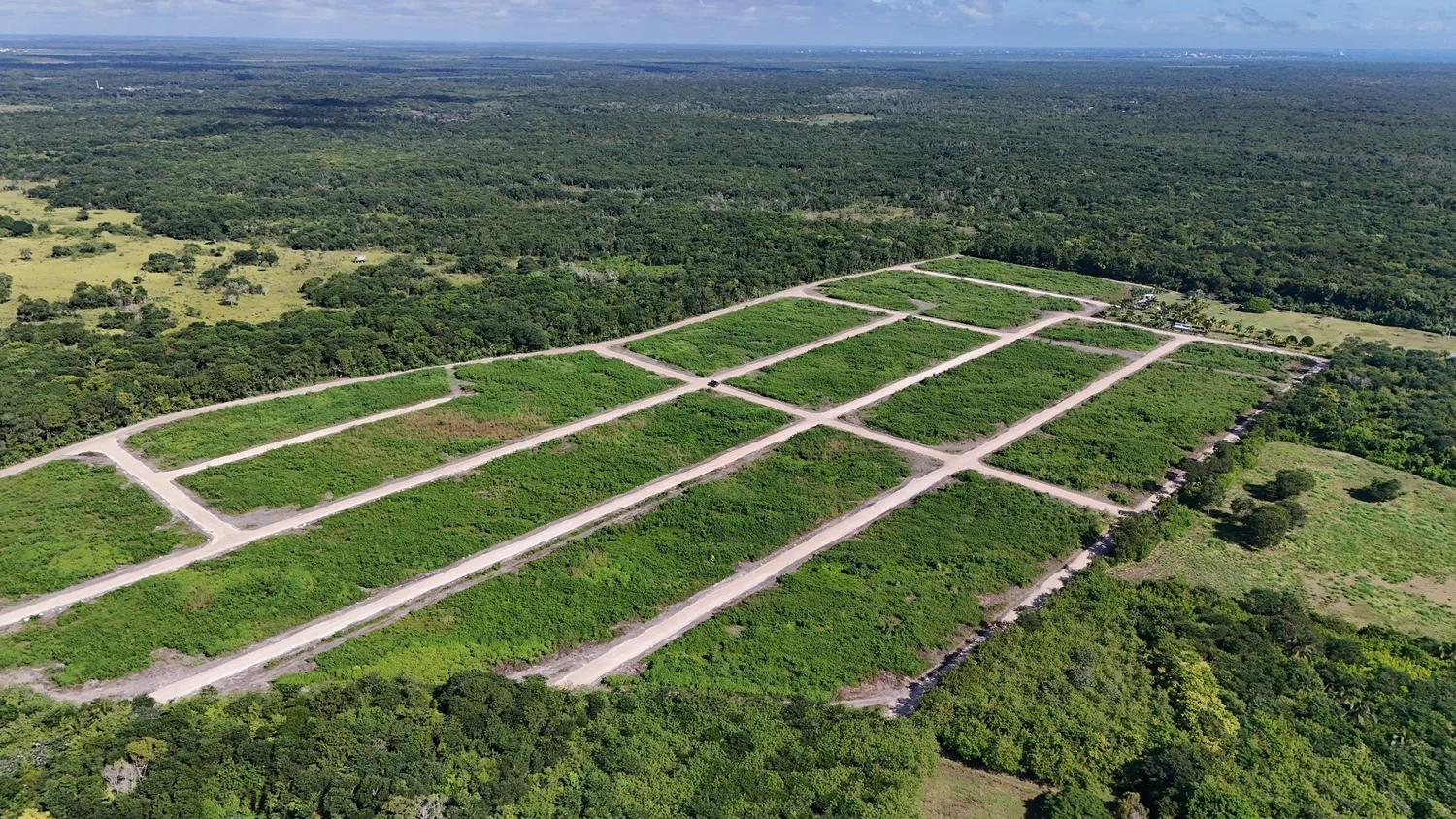
At Coastal Vista Phase 2, the roads are cut and the lots are laid out on open ground near Corozal Bay, with two open green spaces planned as community gardens. That does not make any lot bug-free, and no seller should claim that. Visit at dusk and judge for yourself.
What to pack for a land-shopping trip
Walking lots means time in grass and brush, often in the late afternoon when the light is good and the heat has eased. That is also when mosquitoes start to bite. A small kit makes the day far more pleasant:
- Repellent you trust, applied before you get out of the car, plus a spare for the afternoon. Residents report that common brands are sold in Corozal, but bring your own to be sure.
- Long, light-colored clothing and closed shoes or boots for walking through grass.
- A hat and sunscreen, since much of the walking is in full sun.
- Anti-itch cream or antihistamine, especially if you react strongly to bites.
- Water, because heat and bites are a tiring combination.
Keep notes on each lot as you go: how much breeze there was, how many bites you got and what the surroundings looked like. Comparing those notes later is more useful than relying on memory after a long day.
Frequently asked questions
Are there sandflies in Corozal?
Residents report that sandflies are much less of a problem in Corozal than in the south, partly because there is little sand beach. Midges can still appear on calm evenings.
What time of year has the fewest mosquitoes?
The dry season, especially the windy months of roughly March to May, tends to be easier. The rainy months from June to November usually bring the most.
Is there dengue in Corozal?
Canada's travel advice lists dengue as a risk throughout Belize. Use repellent, cover up at dawn and dusk and remove standing water around your home.
Do people in Corozal use air conditioning to avoid bugs?
Some do, but many rely on screens, fans and breeze. Closed, air-conditioned rooms do keep bugs out, at a higher power cost.
Come see the land at dusk
Prices and open lots are on the Phase 2 lot map. If you want to see what evenings feel like on site before you commit, ask us to schedule a late-afternoon visit.