
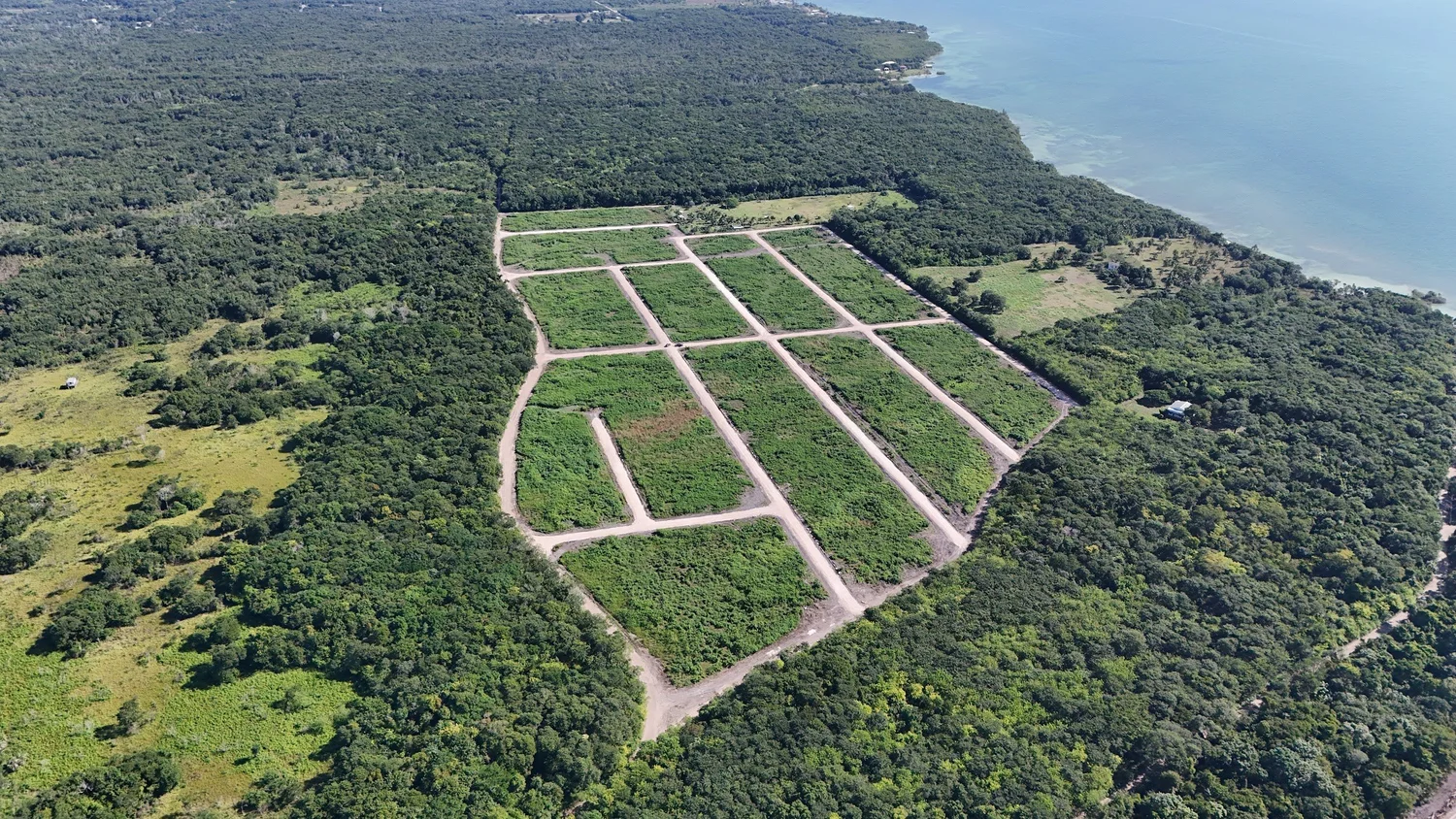
Yes, you can use a HELOC to buy land in Belize: borrow against your US or Canadian home, wire the money and pay cash. It can be cheaper and faster than Belizean financing, but your house becomes the collateral, the rate is usually variable, and in the US the interest is generally not tax-deductible for this use.
A home equity line of credit, or HELOC, is popular with North American buyers because Belizean bank mortgages are hard for non-residents to get. This guide covers how the borrowing limits work in each country, the costs and risks, a side-by-side comparison with seller financing, and the paperwork on the Belize end. For other routes, see our guide to comparing land financing offers.
How does a HELOC work?
The US Consumer Financial Protection Bureau explains that a HELOC is an open-end line of credit secured by your home that you can draw on repeatedly up to a limit. Its HELOC explainer highlights several features that matter for a land purchase:
- Draw period. You can borrow during a set window, which could be about 10 years.
- Repayment period. After the draw period you can no longer borrow and must repay, often over 10 or 20 years. Payments can rise sharply, and some plans require the full balance when repayment begins.
- Variable rates. Most HELOCs have variable interest rates, so payments change. Some let you convert part of the balance to a fixed rate.
- Frozen lines. The lender may limit or freeze further borrowing if your home's value falls or your finances change.
- Risk to your home. If you cannot repay, you could lose your house.
How much can you borrow?
Limits depend on your lender and country.
- Canada. The Financial Consumer Agency of Canada's page on borrowing against home equity says you may borrow up to 65% of your home's value with a HELOC, and usually up to 80% of your home's value in total once your mortgage is included.
- United States. Limits are set by each lender based on your equity, credit and income. Ask for the combined loan-to-value limit in writing.
Illustrative Canadian example: a home valued at C$600,000 with a C$300,000 mortgage. Eighty percent of the value is C$480,000. Subtract the mortgage and up to C$180,000 might be available, well within the 65% HELOC cap. Your lender's assessment of income and credit still decides the final figure.
HELOC vs seller financing: a worked comparison
Suppose a lot costs US$25,000 cash, and the seller also offers financing at the cash price plus a flat US$2,500 (the structure Coastal Vista uses). If you instead draw US$25,000 on a HELOC and repay it in equal monthly payments over 36 months, the interest depends on your rate. The rates below are hypothetical, not quotes:
| HELOC rate (assumed fixed) | Monthly payment | Total interest over 36 months | Compared with a US$2,500 premium |
|---|---|---|---|
| 6% | $760.55 | $2,380 | About $120 less |
| 7% | $771.93 | $2,789 | About $289 more |
| 8% | $783.41 | $3,203 | About $703 more |
| 9% | $794.99 | $3,620 | About $1,120 more |
This simple table ignores HELOC setup fees, wire fees, exchange costs for Canadians, and any down payment on the seller plan, all of which shift the result. The broader point holds: a HELOC is not automatically cheaper. It wins when your rate is low and you repay quickly. Seller financing can win when rates are high, and it does not put your home on the line.
Paying only interest on a HELOC keeps the monthly cost low (US$25,000 at a hypothetical 7% is about US$146 a month), but the balance never shrinks and stays exposed to rate increases.
Tax points to check
- US interest deduction. IRS Publication 936 says home equity interest is deductible only if the borrowed funds are used to buy, build or substantially improve the home that secures the loan. Buying a lot in Belize with a HELOC on your US house generally does not meet that test.
- Canada. Whether interest is deductible depends on how the borrowed money and the property are used. Ask your accountant before assuming it is.
- Foreign property reporting. Canadians should note that, for Form T1135, the CRA counts the full cost of a property bought with borrowed money, not just the cash you put in. See our post on T1135 and Belize land.
This is general information, not tax or legal advice. Please confirm your situation with your own tax advisor and a licensed Belizean attorney.
Getting the money to Belize
Once the HELOC is drawn, the Belize side is the same as any cash purchase:
- Draw and wire. Move the funds to your regular account, then wire them to the seller or your attorney's account as your contract directs. Our guide to paying for land by wire transfer covers fees and timing.
- Keep the paper trail. The Central Bank of Belize's Exchange Control Direction No. 15 expects non-resident buyers to pay with foreign currency sold to an authorized dealer in Belize or from an external account. Keep your HELOC statement and wire confirmations with your closing file.
- Central Bank notice and transfer. Your attorney gives prior written notice of the transfer to the Central Bank, pays stamp duty and registers the transfer.
A note for Canadians on currency. A Canadian HELOC is in Canadian dollars, while most Belize land is priced in US dollars. You take the exchange-rate hit once, when you convert, and then owe a Canadian-dollar debt. Get a quote from your bank and from a currency transfer service on the same day, and compare the total Canadian dollars each would take to deliver the exact US$ amount on your contract.
When a HELOC makes sense, and when it doesn't
It may suit you if:
- You have substantial equity and a stable income to cover payments if rates rise.
- Your HELOC rate is low enough to beat the seller's financing cost.
- You want title in your name at closing rather than at the end of a payment plan.
- You plan to repay quickly, for example from a pending home sale.
Think twice if:
- You are retiring soon and your income will drop.
- You would only manage interest-only payments.
- Losing access to the line, or a rate jump, would strain your household budget.
- You are also planning to borrow against the house to build in Belize later.
Questions to ask your HELOC lender
- What is the current rate, what is it tied to, and how often can it change?
- How long is the draw period, and what happens to my payment when it ends?
- Can I lock part of the balance at a fixed rate, and at what cost?
- Are there setup, annual, appraisal or early-closure fees?
- Under what conditions can you reduce or freeze my limit?
Having those answers in writing lets you plug a realistic rate into the comparison table above instead of a best case.
Frequently asked questions
Can I use a HELOC on my US or Canadian home to buy property abroad?
Often, yes, but read your HELOC agreement and ask your lender whether it places any conditions on how the funds are used before you sign a land contract.
Is HELOC interest deductible if I buy Belize land?
In the US, IRS Publication 936 limits the deduction to funds used to buy, build or substantially improve the home securing the loan, so generally not. Canadians should ask their accountant.
Is a HELOC cheaper than seller financing?
Sometimes. Compare the total interest at your actual rate and repayment speed with the seller's total financing cost, then weigh the risk to your home.
Can a Belize lot secure the loan instead of my house?
No. A HELOC is secured on your home. Borrowing against the Belize lot itself would mean a Belizean loan, which is harder for non-residents to get.
Compare both options on a real lot
Pick a parcel on the lot map to get an exact cash price, then ask us for the financing schedule so you can run your own HELOC numbers against it.