
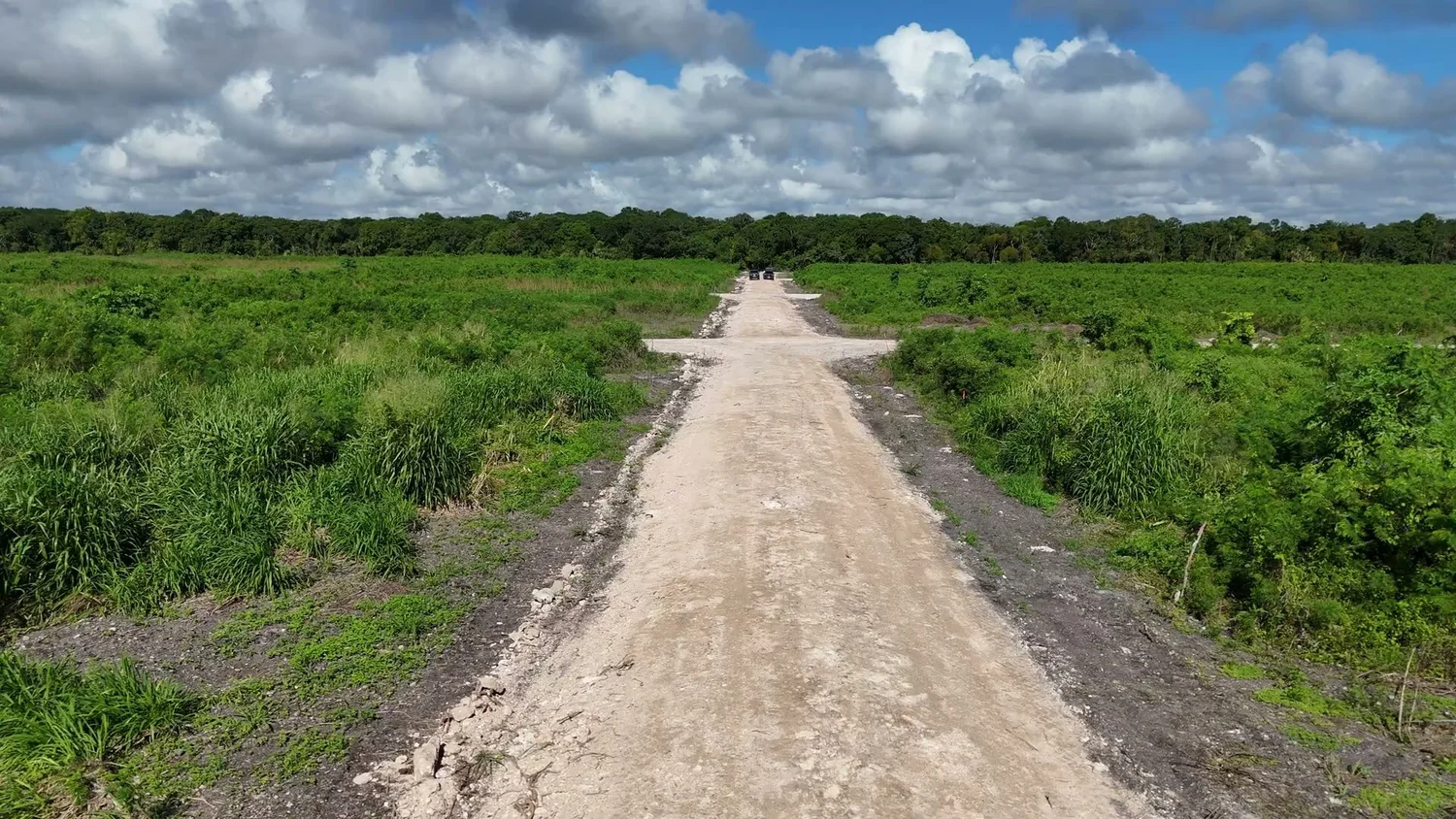
Yes, parts of Consejo Road have flooded during heavy rain. News reports from 2013 and resident accounts describe stretches becoming hard to pass, at times only by 4x4, usually for short periods in the rainy season (June to November). How often it happens now depends on recent road maintenance, so check current conditions before you buy.
This post explains what has been reported, why the road behaves the way it does, how to tell a flooded road from a flooded lot, and the questions to ask any seller on Consejo Road, including us.
What is Consejo Road?
Consejo Road is the single road connecting Corozal Town with the village of Consejo, at the northern tip of the Corozal District where Corozal Bay meets Chetumal Bay. It runs about 7 to 8 miles. Along it are farms, homes and several newer subdivisions, including Coastal Vista. Because it is the only route in and out for the Consejo end, any trouble on the road affects everyone past that point.
A 2013 report by News 5 Belize described the road at that time as built of clay and lime, and said it was failing under heavy vehicle traffic. That kind of surface drains poorly when it is saturated, which explains much of the flooding history.
What has been reported about flooding?
There are three main public sources, and all are a few years old. They show the problem existed; they do not tell you how the road performs this season.
- News 5 Belize (September 2013): heavy rains in the north flooded the area, and runoff from a nearby dumpsite spilled onto the road. Residents asked the area representative and the Ministry of Works for urgent help.
- A letter from the Consejo Village Council, published by Amandala, said the road floods in the rainy season, that heavy rain had left hundreds of residents unable to reach town without four-wheel drive, and that mud and sinkholes remained after the water dropped.
- Resident posts on expat.com described flooding about once or twice a year, passable only by 4x4 when it happens, with most people waiting it out at home.
The dumpsite detail matters. If you are considering property near the road, ask the village council or the Corozal Town Council about the current status of waste disposal in the area and whether drainage has changed since those reports.
When is the risk highest?
The National Meteorological Service of Belize says the rainy season runs from June to November, with a sharp start in early June across Corozal. Northern Belize averages about 60 inches (1,524 mm) of rain a year, spread more evenly through the year than in the south. Tropical storm activity peaks in September and October.
| Period | What to expect | Road risk |
|---|---|---|
| December to May | Dry season; April is usually the driest month | Low; dust is the bigger issue |
| June to July | Rains begin sharply; tropical waves | Rising, especially after long downpours |
| August | Often a short break in rainfall | Moderate |
| September to November | Peak storm months, cold fronts start in November | Highest; a single storm can close low spots |
For a fuller picture of the seasons, see our post on Corozal weather and climate, and for storm planning, our guide to hurricanes in northern Belize.
A flooded road is not the same as a flooded lot
Buyers often mix these up. A road can hold water in a dip while lots a few hundred feet away stay dry, and the reverse can also be true. Look at each separately.
Road flooding
This affects access. It can mean a day or two of staying home, a slow drive through water, or a detour that does not exist because there is only one road. It matters most if you commute, have medical needs or rent your home to guests.
Lot flooding
This affects what and where you can build. Signs include standing water after rain, dark soil lines on tree trunks, mangrove or sawgrass on the property, and neighbors who have raised their houses on fill. A lot that holds water may need fill and a raised foundation, which adds cost.
Questions to ask before you buy on Consejo Road
- How has the road performed in the last two rainy seasons? Ask the seller, neighbors and someone at the village council. Specific dates are better than general reassurance.
- Is the lot above the road? Ask for any survey or elevation information. If none exists, a surveyor can take spot heights.
- Where does water go? Look for swales, culverts and drains along the internal roads, and ask who maintains them.
- Has fill been added? If so, where did it come from and how was it compacted?
- Who maintains the access road? Public roads are the government's job; internal subdivision roads may fall to the developer or an owners' association.
- What did the last big storm do? Ask to see photos taken after heavy rain.
Add these to the items in our land due diligence checklist, and have a licensed Belizean attorney review the title and access before you commit.
How one road affects building and renting
Flooding is not only a homeowner issue. It also shapes construction and rental plans.
Construction schedules
Concrete trucks, block deliveries and fill hauling all depend on the road. Builders in northern Belize often plan heavy deliveries and foundation work for the dry months, from roughly December to May, and leave interior work for the wet season. Ask any builder you interview how they handle access delays and whether their quote assumes dry-season work. Our guide to hiring a builder in Belize lists other questions to ask.
Vacation rentals
If you plan to rent your home to guests, a closed road on a check-in day is a real problem. Put a note in your listing about rainy-season access, keep a local contact who can meet guests, and price the wet months with that in mind.
Insurance and emergencies
Ask your insurer whether flood damage is covered and how claims are handled when access is cut. For medical needs, know your nearest clinic and how you would reach it if the road were closed for a day.
How Coastal Vista approaches drainage and access
Coastal Vista Phase 2 is a 47.11-acre parcel on Consejo Road, northeast of Corozal Town. The internal roads are cut and the lot lines are laid out, and about 4.8 acres are set aside as two open green spaces. We sell land only; owners hire their own builder and follow the community covenants.
We would rather you see the site after rain than take our word for it. If you are planning a trip, ask us for recent photos, or book a visit during the wet months. We are glad to walk the internal roads with you and point out where water runs.
Practical tips if you live at the Consejo end
- Choose the right vehicle. Higher clearance helps on any rural road in Belize.
- Keep a storm pantry with a week of food, drinking water, medicine and fuel for a generator if you have one.
- Collect rainwater. Many homes in the area already use cisterns, which fill fast in the wet season.
- Do not drive into moving water. Depth is hard to judge on a clay road, and sinkholes can hide under the surface.
- Watch the forecast. The National Meteorological Service publishes daily and marine forecasts; plan town trips ahead of heavy rain.
Frequently asked questions
How often does Consejo Road flood?
Residents have described flooding about once or twice a year in the rainy season, but this varies with rainfall and road works. Ask locals about the most recent seasons.
Can a regular car get through when it floods?
Reports describe some flooded stretches as passable only by 4x4. In most cases people wait a day or two for the water to drop.
Is Consejo Road paved?
Past reports describe a clay and lime surface. Road works happen from time to time, so check the current condition when you visit rather than relying on older accounts.
Does road flooding mean the lots flood?
No. They are separate questions. Check the lot's elevation, drainage and history on its own.
Walk the land in any season
Lot prices and live availability are on the Phase 2 lot map. If you want rainy-season photos of the internal roads or a time to see the site after a storm, reach out to the team and we will set it up.