
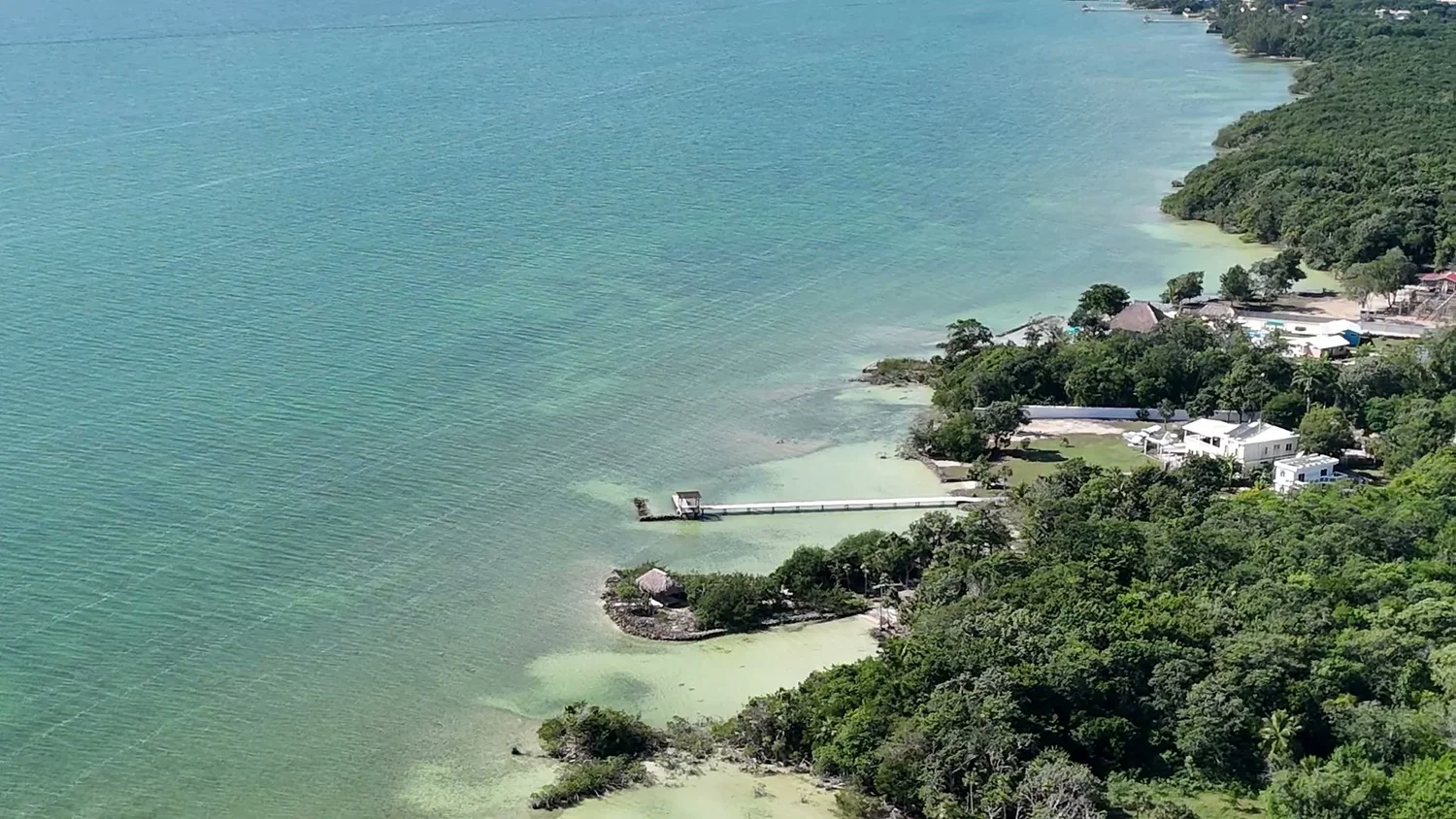
Corozal, Belize has a warm tropical climate with a dry season from roughly November to May and a rainy season from about June to November. Daytime highs run from the low 80s °F in winter to the low 90s °F in late spring, and the north is the driest part of the country, with rain spread fairly evenly through the wet months.
That is the short version. If you are planning a scouting trip, choosing when to visit a lot, or thinking about how a house should be designed for this climate, the month-by-month detail matters. Below we walk through the seasons, the averages, and what each part of the year feels like on the ground in northern Belize.
What is the climate like in Corozal?
Corozal sits on Corozal Bay at the top of Belize, just south of the Mexican border. According to the National Meteorological Service of Belize climate summary, the north receives about 60 inches (1,524 mm) of rain a year, the lowest total in the country. The far south can see up to 160 inches. That difference is a big part of why many people who spend time in both regions describe the north as easier to live in day to day: fewer washed-out roads, less mold pressure, and more sunny afternoons.
The weather station normals for Corozal (1981–2010, published by the National Meteorological Service) show an annual average temperature of about 79 °F (26 °C), with mean daily highs near 89 °F and lows near 70 °F. The breeze off the bay helps. Coastal stations in Belize show smaller swings between day and night than inland stations, because sea breezes moderate the heat.
Corozal weather by month
The table below summarizes the 1981–2010 climate normals for Corozal. Treat these as long-term averages, not a forecast. Individual years can be wetter, drier or hotter.
| Month | Avg high | Avg low | Avg rainfall |
|---|---|---|---|
| January | 83 °F (28 °C) | 63 °F (17 °C) | 2.3 in (59 mm) |
| February | 87 °F (30 °C) | 66 °F (19 °C) | 1.3 in (32 mm) |
| March | 89 °F (32 °C) | 66 °F (19 °C) | 1.3 in (32 mm) |
| April | 91 °F (33 °C) | 69 °F (21 °C) | 1.8 in (46 mm) |
| May | 92 °F (33 °C) | 73 °F (23 °C) | 4.2 in (108 mm) |
| June | 91 °F (33 °C) | 75 °F (24 °C) | 8.5 in (217 mm) |
| July | 91 °F (33 °C) | 74 °F (23 °C) | 5.5 in (140 mm) |
| August | 91 °F (33 °C) | 74 °F (23 °C) | 6.8 in (173 mm) |
| September | 91 °F (33 °C) | 73 °F (23 °C) | 7.7 in (196 mm) |
| October | 89 °F (32 °C) | 71 °F (22 °C) | 7.6 in (194 mm) |
| November | 86 °F (30 °C) | 67 °F (20 °C) | 3.8 in (96 mm) |
| December | 84 °F (29 °C) | 65 °F (18 °C) | 2.6 in (65 mm) |
Source: National Meteorological Service of Belize normals for Corozal, as compiled on the Corozal Town reference page. Annual rainfall at the Corozal station averages about 53 inches (1,355 mm).
The dry season: November to May
The National Meteorological Service splits the dry season into two parts, and they feel quite different.
Cool, breezy months (November to February)
From November through February, cold fronts drift down from North America. The NMS notes that fronts affect Belize from October to April and peak in December, January and February, crossing the country roughly once every ten days. Locally these are often called "northers." A front can bring a day or two of cloud, drizzle and a noticeable drop in temperature, followed by crisp, clear weather. January is the coolest month, and nights in the low to mid 60s °F are common. This is why so many Canadians and northern Americans choose these months for a first visit or a winter stay.
Warm, dry, windy months (March to May)
From March, fronts fade and the heat builds. April is the driest month nationally, and May is the hottest. Afternoons in the low 90s °F are normal, and the landscape turns brown and dusty in places. If you are walking lots, this is when you will see the ground at its firmest, and when you can best judge access roads without mud. It is also the most demanding time for heat, so plan site visits for early morning.
The rainy season: June to November
Rain arrives later in the north than in the south. The NMS reports the onset of rains in early June in Corozal District, compared with early May in Toledo. June is often the wettest single month at the Corozal station.
Rain here tends to come as afternoon or evening showers and thunderstorms rather than days of steady downpour. Many mornings are bright and usable. The NMS also describes a brief dip in rainfall in August in most districts, known locally as the "Mauga" season, before rain picks up again in September and October.
The rainy season overlaps with the Atlantic hurricane season, which runs from June 1 to November 30. The NMS notes that tropical storms and hurricanes in the region peak in September and October. Most years pass without a direct hit on the north, but planning for storms is part of owning property here. We cover that in detail in our guide to hurricanes in northern Belize.
How humid is it, and what does the heat feel like?
Corozal is humid for much of the year, especially from May to October. People who have lived in South Florida or along the Gulf Coast usually find it familiar. The bay breeze makes a real difference in the afternoon, and homes oriented to catch it, with shaded verandas and cross-ventilation, stay noticeably cooler.
A few practical notes from the climate data:
- Night-time relief is greatest in winter. Lows drop into the 60s °F from December to March, which makes sleeping without air conditioning realistic for many people.
- Late spring is the hottest stretch. April and May combine high temperatures with little rain, so the sun feels intense.
- The rainy season is warm at night. Lows stay in the mid 70s °F from June through September.
When is the best time to visit Corozal?
It depends on what the trip is for.
- For comfort and sightseeing: December to March offers the most pleasant temperatures and the lowest rainfall. It is also the busiest stretch for winter visitors.
- For inspecting land: visiting once in the dry season and once in the rainy season gives you the full picture. Dry months show access and layout clearly. A visit in June or September shows how water moves across a property after heavy rain, which is useful when you think about drainage and where to set a house pad.
- For lower prices on travel: the shoulder months of May, June and November can be quieter, but check flight and accommodation prices for your own dates.
If you are planning a scouting trip, our guide on how to get to Corozal covers flights, roads and water taxis.
How the climate shapes building and land decisions
Climate is not only about vacation planning. It affects what you build and how you maintain it. Some points buyers in northern Belize often consider:
- Orientation and shade. Prevailing breezes and the strong late-day sun influence where windows, verandas and roof overhangs should go.
- Drainage. Even in the drier north, a heavy June or October storm can drop a lot of water quickly. Raised slabs, sloped grading and good gutters help.
- Roofs and wind. Because the hurricane season overlaps with the wet months, roof design and tie-downs matter. Your architect and builder can advise on local practice.
- Water collection. Many Belizean homes use rainwater cisterns. The distinct wet and dry seasons affect how large a tank you would want.
- Construction timing. Some owners prefer to pour foundations and frame during the drier months, though builders work year-round.
Coastal Vista sells land only, so owners choose their own architect and builder and design for the climate on their own timeline. Our building your home page and the post on the cost to build a house in Belize are good next reads.
Frequently asked questions
Does it get cold in Corozal?
Not by northern standards. January averages highs near 83 °F and lows near 63 °F. After a cold front, evenings can feel cool enough for a light sweater.
What is the rainiest month in Corozal?
In the 1981–2010 normals, June is the wettest month at the Corozal station, followed by September and October. Rain usually comes in showers rather than all-day storms.
Is Corozal drier than the rest of Belize?
Yes. The National Meteorological Service lists the north as the driest region, at about 60 inches a year, compared with up to 160 inches in the south.
When is hurricane season in Belize?
June 1 to November 30, with the most storm activity in September and October. Follow the National Meteorological Service and NEMO for official alerts.
Plan your visit around the seasons
Whether you prefer a breezy January walk-through or want to see the land after a June downpour, the climate in Corozal gives you options. When you are ready to compare specific lots, the Coastal Vista lot map shows current prices and availability, and you can reach our team to plan a visit that fits the time of year you have in mind.