
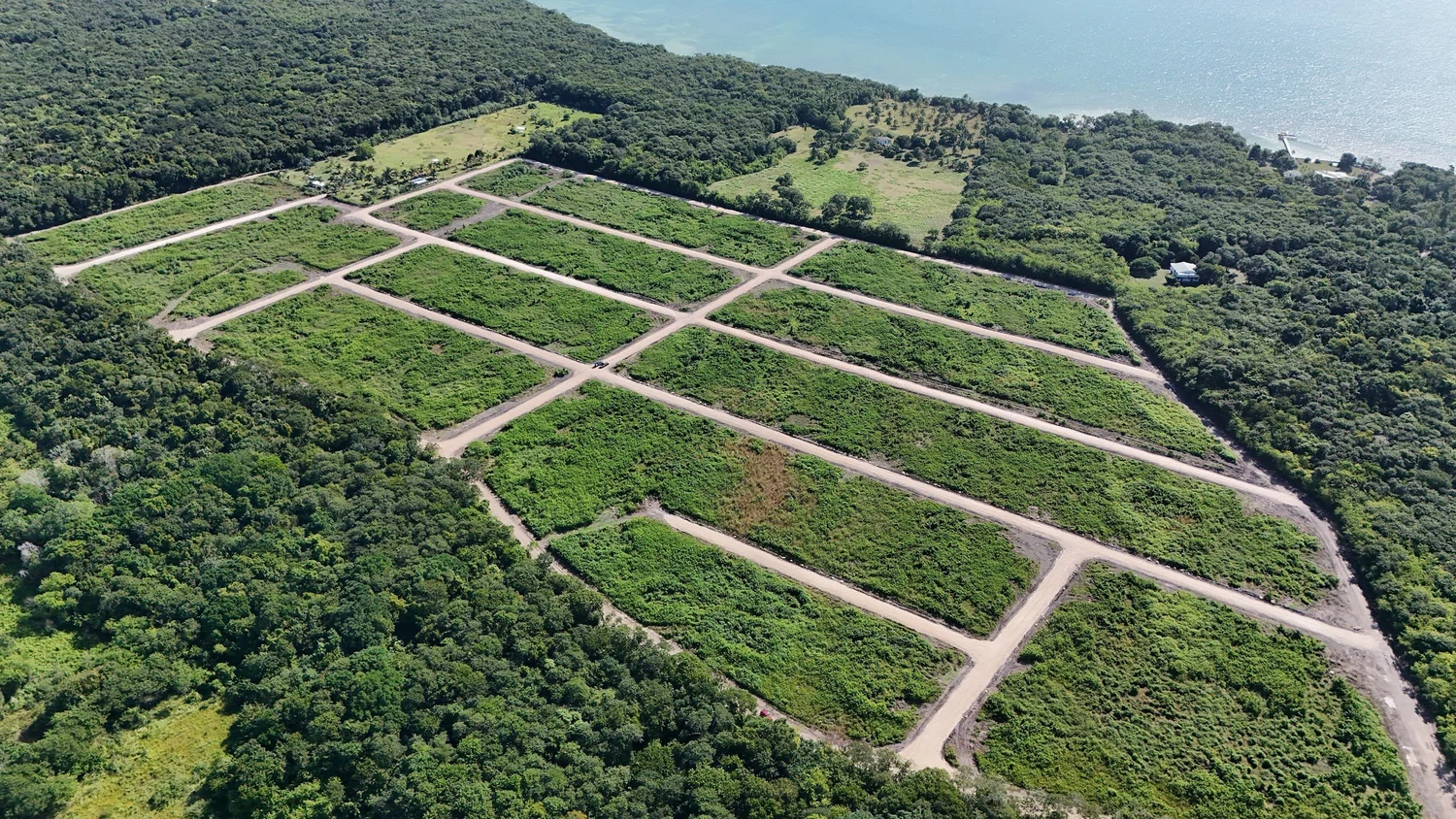
Well drilling in Belize follows a simple path: pick a site away from your septic system, hire an experienced local driller, drill and case the well, test the water, then add a pump and whatever treatment the test calls for. In Corozal District, groundwater is often available in the porous limestone, but it can be hard and high in sulphate, so testing and treatment are part of the budget.
This guide covers what to expect underground in northern Belize, the steps of a drilling project, what drives cost, water quality and how a well fits with rainwater and other sources. Treat it as a planning overview; your driller, engineer and local health officials should guide the specifics for your lot.
What groundwater is like in northern Belize
Most of northern Belize sits on calcareous (limestone-derived) sediments with high permeability, which is why wells are common here. But the summary on water supply and sanitation in Belize also flags several quality issues worth knowing before you drill:
- Hardness and sulphate. It singles out Corozal District for large concentrations of hardness and sulphate in some areas.
- Chloride (salt). High chloride is found along the coast and tidal rivers, and in some inland wells in the northern half of the country.
- Seasonal changes. Poorer groundwater quality is more likely in the dry season, which in the north can last three to four months.
- Limited data. Aquifers and their recharge have not been thoroughly mapped, so local experience matters a great deal.
An older PAHO review of the water sector in Belize noted that groundwater is a major source of drinking and irrigation water, that many rural communities rely on hand pumps or simple systems, and that abstraction and quality were not tightly controlled at the time. The practical lesson for a lot owner is the same today: do not assume; test.
Step by step: drilling a well on your lot
- Ask the neighbors. Find out how deep nearby wells are, how much they yield and how the water tastes and smells. This is the best predictor of what you will find.
- Check rules and services. Ask whether a public or village water system serves the area, whether your subdivision's covenants say anything about wells, and whether registration or a permit is needed. Requirements can change, so confirm with the relevant authority or a Belizean attorney.
- Choose the site. Put the well uphill of, and as far as practical from, septic tanks, drain fields, animal pens and fuel storage. Plan where the septic system will go at the same time, and confirm required separation distances with your engineer and the building authority.
- Get quotes from established drillers. Ask about equipment, typical depths in your area, casing material, how they seal the top of the well, and whether the price includes the pump.
- Drill, case and seal. The borehole is lined with casing, screened at the water-bearing zone, and sealed at the surface so runoff cannot flow down the outside of the casing.
- Develop and test-pump. The driller pumps the well to clear sediment and to see how much water it yields over time.
- Send a sample to a lab. Test for bacteria, salinity (chloride and conductivity), hardness, sulphate and anything the lab or local health officials recommend.
- Install pump and treatment. Choose a pump sized to the well's yield and your demand, and add treatment based on the test results.
What drives the cost of a well
Prices vary by driller, location, depth and equipment, and we have not seen a reliable published price list for Corozal, so get two or three written quotes. These are the variables that move the number:
| Cost factor | Why it matters |
|---|---|
| Depth | Usually priced per foot; deeper water costs more to reach and pump |
| Ground conditions | Hard rock layers or caving sand slow drilling and may need more casing |
| Diameter and casing | Wider holes and heavier casing cost more but suit larger pumps |
| Pump type | Submersible pumps cost more than surface pumps but handle deeper water |
| Power | Grid connection, or a solar pump with panels and controller |
| Treatment | Softener, sediment and carbon filters, UV, or reverse osmosis for drinking water |
| Storage | A tank and pressure system so the pump does not cycle constantly |
| Access | The rig needs a clear, firm path to the site |
Make sure every quote states what happens if the driller hits poor water or a low yield: do you pay for a dry hole, and is there an option to drill elsewhere?
Water quality and treatment options
Match the treatment to the test, not to a sales pitch.
- Hard water (calcium and magnesium) leaves scale in pipes, water heaters and fixtures. A softener or scale-control system helps protect equipment.
- High sulphate can give water a bitter taste and a laxative effect for people not used to it. Reverse osmosis at the kitchen tap is a common way to make drinking water from such sources.
- Salinity near the coast may rule a well out for drinking and limit it to flushing or irrigation. Pumping heavily from a shallow coastal well can also draw in more salt water.
- Bacteria from surface runoff or nearby septic systems is treated with disinfection (chlorination or UV), but the first fix is a well-sealed casing and a good location.
- Retest after heavy rains and in the dry season; quality can change through the year.
Well, cistern or both?
Many households in northern Belize combine sources. Rainwater is soft and generally low in minerals; groundwater is available year-round but may be hard or salty. A common setup is rainwater for drinking and cooking (after treatment) and well water for laundry, toilets and the garden, with the well as backup when the cistern runs low in the dry months the National Meteorological Service describes in its climate summary. Our guide to rainwater cisterns in Belize shows how to size storage using Corozal rainfall.
| Source | Strengths | Limits |
|---|---|---|
| Rainwater cistern | Soft water, no drilling, works with gravity or small pumps | Needs storage for the dry season; roof size limits supply |
| Drilled well | Year-round supply, independent of rainfall | Quality varies (hardness, sulphate, salt); needs power to pump |
| Public or village system | Treated supply, little maintenance | Not available everywhere; outages possible |
Power, pumps and maintenance
A well is only as reliable as its pump and power. Solar water pumping suits rural lots well, since the sun is strongest when water demand is highest; see off-grid solar in Belize. Protect the wellhead with a sealed cap and a concrete pad, keep the area clear of chemicals and animals, and keep a spare pressure switch and basic parts on hand. Hurricane season is a good reminder to have a manual or battery backup for drinking water.
Plan the well and the septic system together, before the house design is final; our post on septic systems in Belize explains the options.
Frequently asked questions
Can I drill a well on my own lot in Belize?
Often yes, but check subdivision covenants, any registration or permit requirements and local water services first. Confirm with a licensed Belizean attorney if in doubt.
How deep are wells in Corozal District?
It varies by location. Neighbors' wells and local drillers are the best guide for your specific lot.
Is well water in Corozal drinkable?
Sometimes, after testing and treatment. Groundwater in parts of the district is hard and high in sulphate, and coastal wells can be salty.
Does Coastal Vista supply water?
Coastal Vista sells land only. Ask us which water options buyers at Phase 2 are using, and confirm the details with your builder.
Plan water before you build
Water planning starts with the lot itself: its location, size and where the house, well and septic will sit. Look over sizes and prices on the Phase 2 lot map, and reach out with your questions about utilities and site layout.