
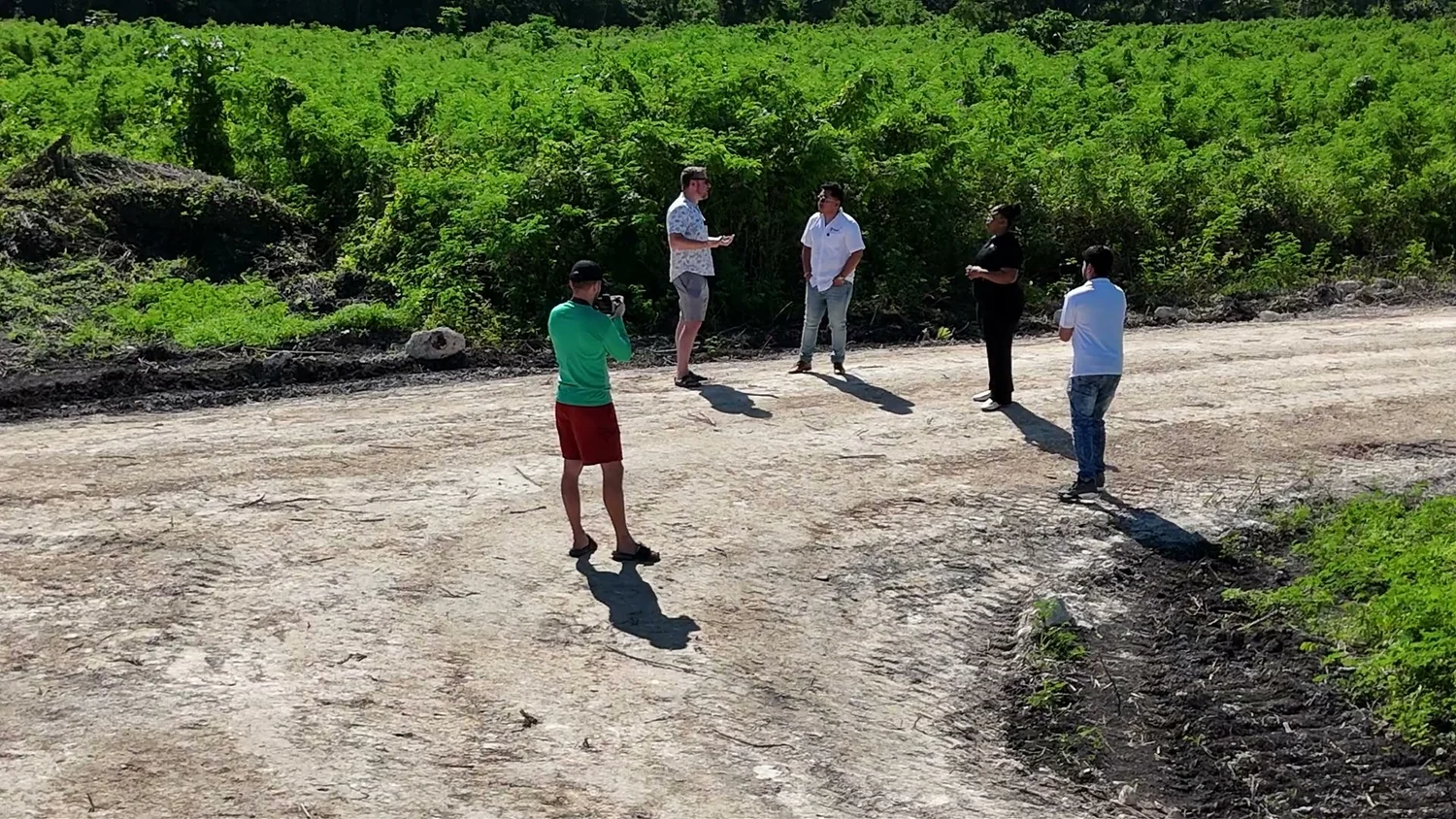
Corozal, Belize has an established expat community of several hundred full-time residents, mostly retirees from the United States and Canada, with more arriving each winter. They live in Corozal Town and in areas to the north such as Consejo Shores and Four Mile Lagoon, and they mix with a largely Spanish- and English-speaking Belizean community.
If you are wondering whether you would find your people in northern Belize, this guide describes who lives here, where, what social life looks like, and how newcomers tend to settle in. It is written from the perspective of a team whose co-founders are Canadian, but the aim is to be useful whether or not you ever buy land from us.
How many expats live in Corozal?
There is no official count of foreign residents by town, so treat any figure as an estimate. International Living reports that several hundred expats live full-time in Corozal District, with more coming during the cold months back home. An earlier AARP profile estimated 600 to 700 Americans and Canadians in Corozal.
Census data gives a glimpse of how concentrated the community is in some areas. In the 2010 census, about 29 percent of residents in the village of Consejo identified as Caucasian, according to its village profile, a much higher share than in most Belizean villages.
For context, the town itself is small. Corozal Town had an estimated population of around 13,500 in 2017, according to figures summarized on the Corozal Town reference page. Expats are a visible but minority part of a community that is mainly Mestizo, Maya and Creole Belizean.
Who are the expats in Corozal?
Most are retirees or semi-retirees. Common profiles include:
- Full-time retirees who have sold up in North America and live in Belize year-round, often under the Qualified Retired Persons program or permanent residency.
- Snowbirds who spend roughly November to April in Corozal and the rest of the year at home. Canadians are well represented in this group.
- Remote workers and early retirees, a smaller but growing group drawn by the lower cost of living and the time zone. Belize stays on UTC-6 year-round, the same as U.S. Central Standard Time, with no daylight saving changes.
- Owners building for later, people who buy land now, visit regularly and plan to build or move on their own timeline.
Our guides to the QRP retirement program and living in Belize as a Canadian cover the residency side in more detail.
Where do expats live in and around Corozal?
| Area | Character | Who it suits |
|---|---|---|
| Corozal Town | Walkable bayfront town with shops, markets, restaurants and the hospital | People who want services close by and may not want to drive every day |
| Consejo Shores | Residential waterfront community north of town, with an established expat presence | Retirees who want quiet, bay views and neighbors with similar backgrounds |
| Four Mile Lagoon | Homes near a lagoon north of town, closer to the border | People who want space and easy access to Chetumal |
| Consejo Road area | Newer subdivisions and open land between town and the coast | Buyers who want to build new, with room for gardens |
International Living noted that living costs in the expat areas north of town tend to run a little higher than in Corozal Town itself, mostly because of housing. Our cost of living in Corozal post has current budgeting guidance.
What is social life like for expats?
Corozal is not a party town, and most people like it that way. Social life tends to revolve around clubs, volunteering, shared meals and the water. International Living lists a range of groups that have been active, including:
- A women's forum and a Rotary Club
- A golf group at Consejo Shores
- The Corozal Bay Sailing Club
- A garden club
- Water aerobics and yoga on the bay
The calendar has a rhythm. Winter is the busiest social season, when snowbirds return and events, potlucks and outings pick up. Summer is quieter, with fewer visitors and a slower pace, which can make it an easier time to settle into local routines and get to know Belizean neighbors.
Groups come and go, so ask around when you arrive. Many newcomers find their first contacts through online forums and social media groups for Corozal residents, then meet people in person at markets, restaurants and events. Bayfront restaurants and bars in town are common meeting points for expats and locals alike.
Volunteering is another way in. Schools, churches, animal welfare groups and community projects often welcome help, and it is one of the better ways to build friendships with Belizean neighbors rather than only with other expats.
Integrating with the wider community
The most settled expats in Corozal tend to be the ones who treat it as a Belizean town rather than an expat enclave. A few things help:
- Learn some Spanish. English is Belize's official language and is widely spoken, but Spanish is the first language for many people in the north. The town's roots go back to Maya and Mestizo refugees from the Caste War of Yucatán in the mid-1800s.
- Shop local. The market, small grocers and local tradespeople are the backbone of town life.
- Be patient with pace. Things often take longer than in North America, from paperwork to repairs. Building in extra time reduces frustration.
- Respect local customs. Greetings matter, and a friendly "good morning" goes a long way.
- Hire and pay fairly. Good working relationships with builders, gardeners and housekeepers shape your experience more than almost anything else.
What do expats say about life in Corozal?
Experiences vary, and it is worth reading a range of views. In an Expat Exchange survey, residents praised the affordability of everyday healthcare and the easy access to specialists in Chetumal, while others noted that local hospital services are basic and that emergency care can be slower than at home. Common themes in expat accounts of Corozal include:
- Positives: the bay, the calmer climate of the north, lower costs, friendly neighbors and the convenience of a Mexican city nearby.
- Challenges: occasional power and internet interruptions, limited local specialist care, heat and humidity in late spring and summer, and slower bureaucracy.
Visiting for a few weeks, ideally in two different seasons, is the best way to see if the balance works for you. Our guide to Corozal weather by month can help you pick dates.
How Coastal Vista fits in
Coastal Vista Phase 2 is a land-only subdivision on Consejo Road, with 164 surveyed lots, more than half already sold. Owners come from different places and stages of life, and each one hires their own architect and builder and builds on their own timeline under community covenants (CCRs). Two open green spaces, about 2.56 and 2.24 acres, are set aside as community gardens, which gives neighbors a natural place to meet. Learn more on our Coastal Vista page or meet the people behind it on our team page.
Frequently asked questions
Are there many Canadians in Corozal?
Yes. Canadians and Americans make up most of the expat community, and many Canadians come for the winter months.
Do I need to speak Spanish to live in Corozal?
No. English is the official language and widely spoken, but Spanish is common in daily life in the north and makes integrating easier.
Is Corozal a good place to retire?
Many retirees think so, for its cost of living, bay setting and access to Chetumal. Weigh healthcare access, climate and distance from family for your own situation.
How do newcomers meet people?
Clubs, volunteering, online community groups and regular visits to local markets and restaurants are the usual starting points.
Meet the neighborhood
The best way to get a feel for Corozal's community is to spend time here, talk to residents and walk the areas you are considering. The Coastal Vista lot map lists every available lot with prices, and you are welcome to reach out to our team to arrange a visit or ask what owners are building.