
Getting a bank mortgage in Belize as a foreigner is possible but limited. Local banks mainly lend to residents, and Central Bank exchange control rules have long expected non-residents to pay for property in full from foreign funds. Belize's licensed international banks do lend to non-residents, usually with large down payments and shorter terms than North American buyers expect.
This guide explains why that is, which kinds of lenders exist, what they ask for, and what most foreign buyers of lots end up doing instead. If you are not yet sure whether to borrow, our post on owner financing in Belize covers the most common alternative.
Why are Belize mortgages hard for non-residents?
The main reason is exchange control. The Central Bank of Belize regulates transactions between residents and non-residents under the Exchange Control Regulations Act, 2003. Its Exchange Control Direction No. 15 (revised December 2014), which covers transfers of land to non-residents, says:
- Payment by a non-resident for property in Belize should come from foreign currency sold to an authorized dealer in Belize, or from an external account.
- Payment is "ordinarily" due in full at the time of purchase.
- The Central Bank may consider mortgage facilities for non-residents who are Belizean nationals, and for other non-residents investing substantial external funds in productive enterprises in Belize.
In practice, that leaves a typical foreign buyer of a residential lot outside both categories when dealing with a local bank. Since 2020, land transfers between residents and non-residents have moved to a prior-notice system under Statutory Instrument No. 106 of 2020, so ask your attorney and lender how the bank is currently applying Direction 15 to mortgage lending. Note too that "resident" for exchange control purposes is defined by the Central Bank and is not the same thing as holding a residency permit.
What kinds of banks operate in Belize?
| Lender type | Who they serve | Currency | Relevance to foreign buyers |
|---|---|---|---|
| Domestic commercial banks | Mainly Belize residents | Belize dollars | Limited for non-residents; more realistic once you have residency, local income and banking history |
| International (offshore) banks | Non-residents only | Foreign currencies | Do offer loans to non-residents; underwriting is conservative |
The Central Bank's page on international banks describes them as offering conventional banking, including personal and commercial loans, in foreign currencies to non-residents only. It lists three licensed international banks: Belize Bank International Limited, Caye International Bank Ltd. and Heritage International Bank & Trust Limited.
What do domestic banks require?
Belize Bank publishes a residential mortgage FAQ that gives a sense of what a local lender expects. It does not address non-resident borrowers, so treat it as the resident baseline:
- Photo ID, proof of address and an employment letter or certified income statement.
- The land title, proof that property tax is paid, a purchase agreement and a valuation report.
- For construction, plans approved by the Central Building Authority and a bill of quantities.
- Equity typically of 20% or 5%, based on the lesser of valuation, price or combined land-and-build cost.
- Interest of 7% to 10% on the reducing balance, a 2% loan fee (minimum $1,000), and terms up to 300 months or retirement age.
- Payments drawn automatically from a Belize Bank account.
For comparison, the Central Bank reported a 12-month weighted average lending rate on new loans of 8.80% in its June 2026 economic highlights.
What about international banks?
International banks are set up to serve non-residents, which makes them the most realistic bank option for a foreign buyer. Terms are set case by case. A 2026 interview-based article by Will Mitchell Real Estate on how Belize Bank International financing works reported a preferred structure of about 60/40 (roughly 40% down), terms commonly up to about 15 years, eligibility for land as well as homes and construction, and underwriting focused on income, liquidity and overall financial strength rather than mainly a credit score. Confirm current terms directly with any bank, since these are reported figures, not a published rate sheet.
Expect to provide tax returns, bank statements, proof of income, a credit report and full know-your-customer documents, and to open an account with the bank.
How to prepare before you apply
Whichever lender you approach, a tidy file shortens the process. Before your first call, gather:
- Two or three years of tax returns and recent pay stubs or pension statements.
- Six to twelve months of bank and investment statements showing the source of your down payment.
- A recent credit report from your home country.
- A notarized copy of your passport and proof of your home address.
- The parcel details: registration section, block and parcel number, plus the seller's title and a draft purchase agreement.
Ask each lender four questions up front: Do you lend to non-residents on land alone? What down payment and term do you offer? What fees and valuation costs will I pay, and when? How long does approval take after a complete application? Write the answers down so you can compare like with like.
Is a mortgage worth it for a lot?
For many buyers of a residential lot, a bank mortgage is more process than the purchase needs. Consider:
- Loan size. Many residential lots, including ours at about US$14,700 to US$32,300 cash, cost far less than a house. Legal, valuation and bank fees take a bigger bite out of a small loan.
- Timing. Bank approval adds weeks. Popular lots can be reserved by someone else in the meantime.
- Down payment. If a lender wants 40% down on a small lot, the remaining balance may be easier to cover with seller financing or savings.
- Building later. A bank relationship may matter more when you build, because construction costs usually exceed the land price. Our guide to the cost to build a house in Belize has current ranges.
Alternatives most foreign lot buyers use
- Cash from savings, wired from a home-country bank.
- Seller financing, where the developer or owner carries the balance. Compare offers using total cost, not the headline rate.
- Home-country borrowing, such as a line of credit secured on a house in the US or Canada. See using a HELOC to buy land in Belize for the risks.
- Waiting until you are resident. Some buyers who move under the Qualified Retired Persons program or another permit later build a local banking history. Our QRP guide explains that program.
Lending and exchange control rules change, and how they apply depends on your status. Please confirm your own situation with a licensed Belizean attorney and the lender.
Financing at Coastal Vista
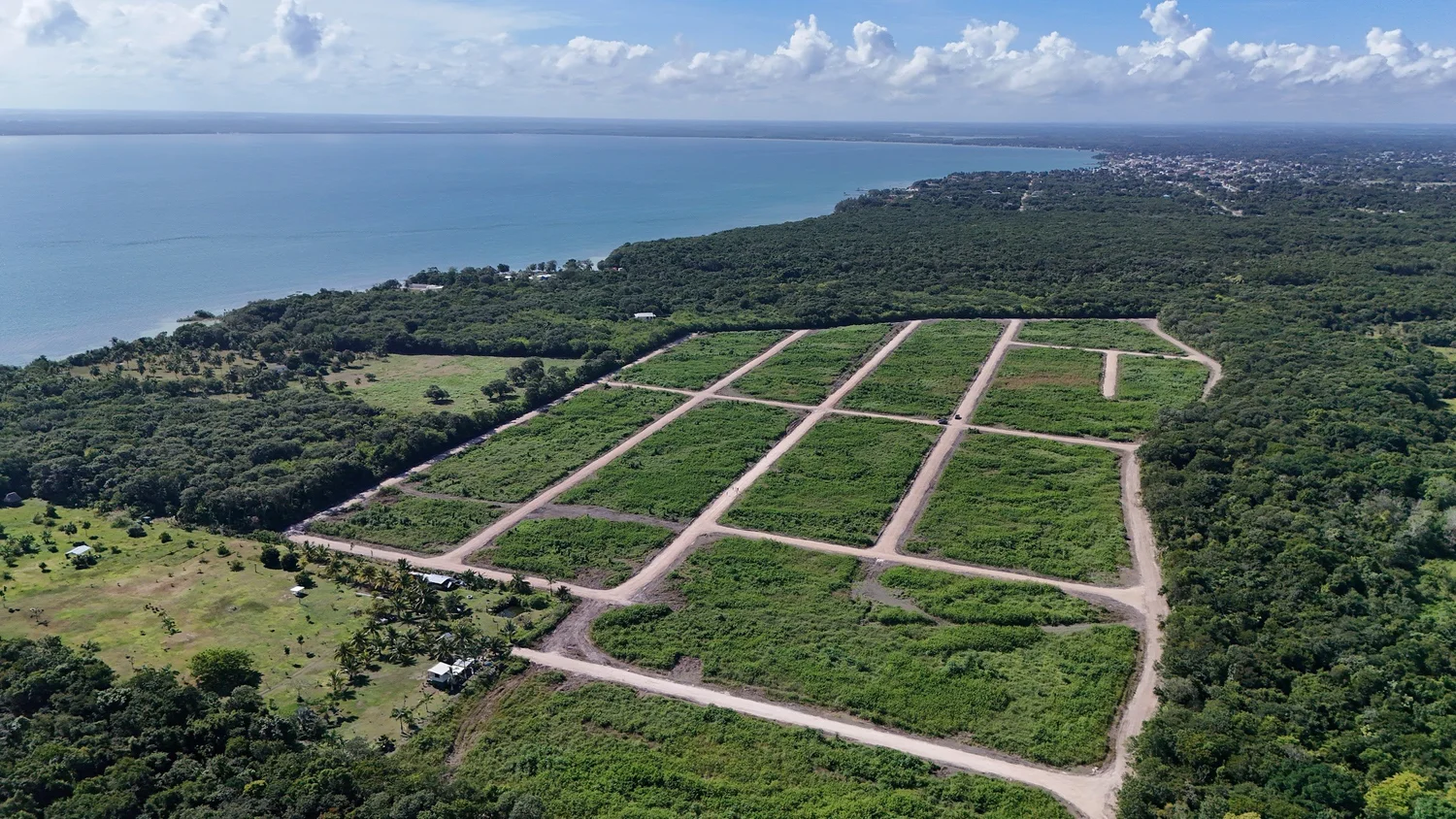
Coastal Vista Phase 2 sells residential lots, land only, on Consejo Road near Corozal Bay. We offer in-house seller financing at the cash price plus US$2,500, so most buyers do not need a bank loan for the land itself. Larger acreage is cash only. When you are ready to build, you hire your own architect and builder and arrange construction funding on your own timeline.
Frequently asked questions
Can Americans or Canadians get a mortgage in Belize?
Some can, mainly through Belize's international banks, with large down payments. Domestic banks focus on residents. Ask lenders directly about your situation.
Do I need Belizean residency to get a local mortgage?
Residency helps, but exchange control status is separate from immigration status. A local lender and your attorney can tell you how you would be classified.
What interest rate should I expect?
Belize Bank's FAQ quotes 7% to 10% for residential mortgages, and the Central Bank's average rate on new loans was 8.80% as of June 2026. International bank pricing is set case by case.
Can I use a Belize mortgage to buy land only?
Some lenders finance land. Others prefer land with a construction plan. Ask before you apply.
Start with the land, then the lender
Knowing the lot and its price makes every financing conversation easier. Check what is open on the Coastal Vista lot map, and contact our team if you would like our financing schedule to compare against a bank offer.